What is NEAR Protocol (NEAR)?
RANK #21A Layer 1 that stopped trying to be a Layer 1. NEAR's two live products are Intents — chain abstraction that has processed over $24bn in cumulative cross-chain swap volume — and an AI infrastructure push where staked NEAR buys confidential compute: more than 500,000 tokens are staked to power private inference across 40-plus models. Whether that is a decisive pivot or a search for relevance is the honest open question.
NEAR Protocol market stats
NEAR Protocol at a glance
- Consensus
- Nightshade, a sharded proof of stake with Doomslug finality
- NEAR Intents
- Over $24bn in cumulative cross-chain swap volume
- AI staking
- Over 500,000 NEAR staked to power private AI compute, unlocking 40+ models
- Accounts
- Human-readable names like alice.near instead of hex addresses
- Supply
- No hard cap; 5% annual issuance, 70% to validators and 30% to the treasury
- Fee model
- 30% of gas fees are rebated to the contract that was called
Categories: Artificial Intelligence (AI) · Smart Contract Platform · Layer 1 (L1) · Near Protocol Ecosystem · Alleged SEC Securities · FTX Holdings
How NEAR Protocol works
NEAR launched in 2020 as a sharded proof-of-stake chain with an unusual emphasis on usability. Accounts are human-readable — alice.near, not a 42-character hex string. Contracts can pay their users' gas, so an application can onboard someone who has never held a token. Nightshade shards the chain so capacity grows by adding shards rather than by demanding more of each validator.
These were good ideas that did not win the Layer-1 race. By 2024 NEAR had solid technology, a reasonable ecosystem and no clear reason for a developer to choose it over Solana or an Ethereum rollup. What it has done since is more interesting than most chains in that position attempt: it largely stopped competing as a Layer 1.
NEAR Intents
Chain abstraction is the idea that users should say what they want, not which chain it happens on. NEAR Intents lets someone swap assets across chains without bridging, holding multiple wallets or knowing where anything settles — solvers compete to fulfil the request and NEAR coordinates the settlement.
It has processed over $24 billion in cumulative swap volume, which makes it one of the few chain-abstraction products with real usage rather than a whitepaper. Note carefully what that figure is: volume routed, not revenue earned, and the gap between those two is where the token question lives.
The AI turn
NEAR's second bet is AI infrastructure, and specifically confidential inference — running models where the operator cannot see the prompt or the output. On 30 July 2026 NEAR AI introduced staking-based payments for these services: stake tokens, receive credits, spend them on private inference and hosting. More than 500,000 NEAR is now staked for this purpose, unlocking access to over 40 models.
The mechanism is genuinely novel — staking as prepayment for compute rather than as security — and the scale is small. Both facts matter, and coverage of NEAR tends to report only the first.
What NEAR is used for
- Gas for transactions, with 30% of each fee rebated to the contract that was called — a direct developer subsidy built into the protocol.
- Staking to validators, which secures the sharded chain.
- Staking as prepayment for AI compute credits, the mechanism introduced in July 2026.
- Storage staking: contracts lock NEAR proportional to the state they occupy, which removes tokens from circulation as usage grows.
- Governance and account registration.
The fee rebate deserves a mention because almost no other chain does it. Thirty per cent of the gas a user pays goes to the contract they called, so a popular application earns revenue from its own traffic without charging anything extra. It is a real and underused piece of protocol design.
NEAR tokenomics and supply
NEAR has no hard cap. It issues 5% annually, of which 70% pays validators and 30% goes to the protocol treasury. All transaction fees are burned apart from the 30% rebated to contracts, so net issuance falls as the chain gets busier.
At current activity the burn does not come close to offsetting 5% issuance, so NEAR is meaningfully inflationary. That is the plain reading and it should not be softened: unless usage rises very substantially, holders are diluted at a rate that staking barely compensates for.
Storage staking as a supply sink
Contracts must lock NEAR in proportion to the on-chain state they use. It is a sensible answer to state bloat — charging for storage rather than only for computation — and it doubles as a demand source that scales with real usage rather than with speculation. It is small today and it is the kind of mechanism that matters if adoption arrives.
Early allocations to the team, foundation and backers vested over the years following the 2020 launch and are largely behind the market now.
NEAR staking and yield
Staking NEAR means delegating to a validator, funded from the 70% of issuance allocated to them. Because issuance is fixed at 5% and split by stake, the effective yield depends on how much of the supply is staked — more stakers, lower rate each.
Unstaking takes a few epochs, on the order of two to three days. Slashing exists in the protocol for provable misbehaviour but has not been a material practical risk for delegators.
The AI staking introduced in July 2026 is a different thing wearing the same word, and conflating them would be a mistake. That is not securing the network — it is locking tokens to buy compute credits for confidential inference and model hosting. It pays no yield. It buys a service.
NEAR Protocol risks
Two pivots in three years
NEAR has repositioned from general-purpose Layer 1, to chain abstraction, to AI infrastructure. Each move was a reasonable response to losing the previous fight, and a project that changes its central story repeatedly is harder to value than one that does not — because you are underwriting a team's judgement rather than a thesis.
Volume is not revenue
$24bn of cumulative Intents volume is real activity. What NEAR earns from it, and how much of that reaches the token, are different and much smaller numbers. Chain abstraction is a thin-margin routing business by nature, and thin margins on somebody else's liquidity is a difficult place to build token value.
The AI market is not short of competitors
Confidential inference is a genuine need and NEAR is a small entrant against well-funded crypto-AI projects and, more importantly, against conventional cloud providers building the same capability with hardware enclaves. 500,000 NEAR staked and 40 models is an early product, and it should be read as one.
Persistent inflation
Five per cent annual issuance against a burn that does not offset it means holders who do not stake are diluted, and stakers are roughly treading water. This only resolves through a large increase in activity.
Sharding complexity
Nightshade is one of the few sharded designs running in production, which is an engineering achievement and a larger surface area than a single-shard chain. Cross-shard interaction is where this class of system historically breaks.
NEAR Protocol: key events
- Apr 22, 2020 — NEAR mainnet launches with Nightshade sharding and human-readable accounts.
- Nov 1, 2024 — NEAR pivots toward chain abstraction, making Intents the central product.
- Jul 30, 2026 — NEAR AI introduces staking-based payments for confidential inference and hosting.
- Aug 19, 2026 — Over 500,000 NEAR is staked for private AI compute, unlocking 40+ models.
NEAR Protocol FAQ
What is NEAR Protocol?
+
A sharded proof-of-stake Layer 1 launched in 2020, built around usability — human-readable account names like alice.near, and contracts that can pay their users' gas. Since 2024 its focus has shifted to chain abstraction through NEAR Intents and to AI infrastructure.
What is NEAR Intents?
+
Chain abstraction: users state what they want rather than which chain it happens on, and solvers compete to fulfil the request while NEAR coordinates settlement. No bridging, no multiple wallets. It has processed over $24bn in cumulative cross-chain swap volume — volume routed, which is not the same as revenue earned.
How does NEAR's AI staking work?
+
Introduced on 30 July 2026: you stake NEAR and receive credits spendable on confidential inference and model hosting on NEAR AI Cloud. Over 500,000 NEAR is staked this way, unlocking access to more than 40 models. It pays no yield — it is prepayment for compute, not network staking, despite sharing the word.
Is NEAR inflationary?
+
Yes. There is no hard cap and issuance is fixed at 5% a year, with 70% to validators and 30% to the treasury. Fees are burned apart from the 30% rebated to contracts, but at current activity that burn does not come close to offsetting issuance.
What is the NEAR staking yield?
+
It depends on how much of the supply is staked, because validators share a fixed 70% of the 5% annual issuance — more stakers means a lower rate each. Unstaking takes a few epochs, roughly two to three days.
What is storage staking on NEAR?
+
Contracts must lock NEAR in proportion to the on-chain state they occupy, so storage is paid for rather than free. It is a sound answer to state bloat and it doubles as a supply sink that grows with genuine usage rather than with speculation.
Why does NEAR rebate gas fees to contracts?
+
30% of the gas a user pays goes to the contract they called, so a popular application earns revenue from its own traffic without charging users anything extra. Almost no other chain does this, and it is one of NEAR's more interesting design decisions.
Sources
This page is information, not financial advice. Prices come from CoinGecko; the text is written and checked by our desk. See our editorial policy.
NEAR Protocol news & analysis
Bitcoin ETFs Swing Back to Positive as Crypto Market Holds Near $3 Trillion
U.S. spot Bitcoin ETFs have erased a $5.8 billion deficit to turn positive for 2026, while the broader crypto market holds near $3 trillion with sentiment firmly in "Greed" territory

Bitcoin Nears $90K as Record ETF Inflows Outweigh Senate's Crypto Bill Setback
A record billion-dollar Bitcoin ETF inflow day pushed BTC above $87,000, showing institutional demand can outweigh regulatory setbacks like the Senate's rejection of the CLARITY Act.
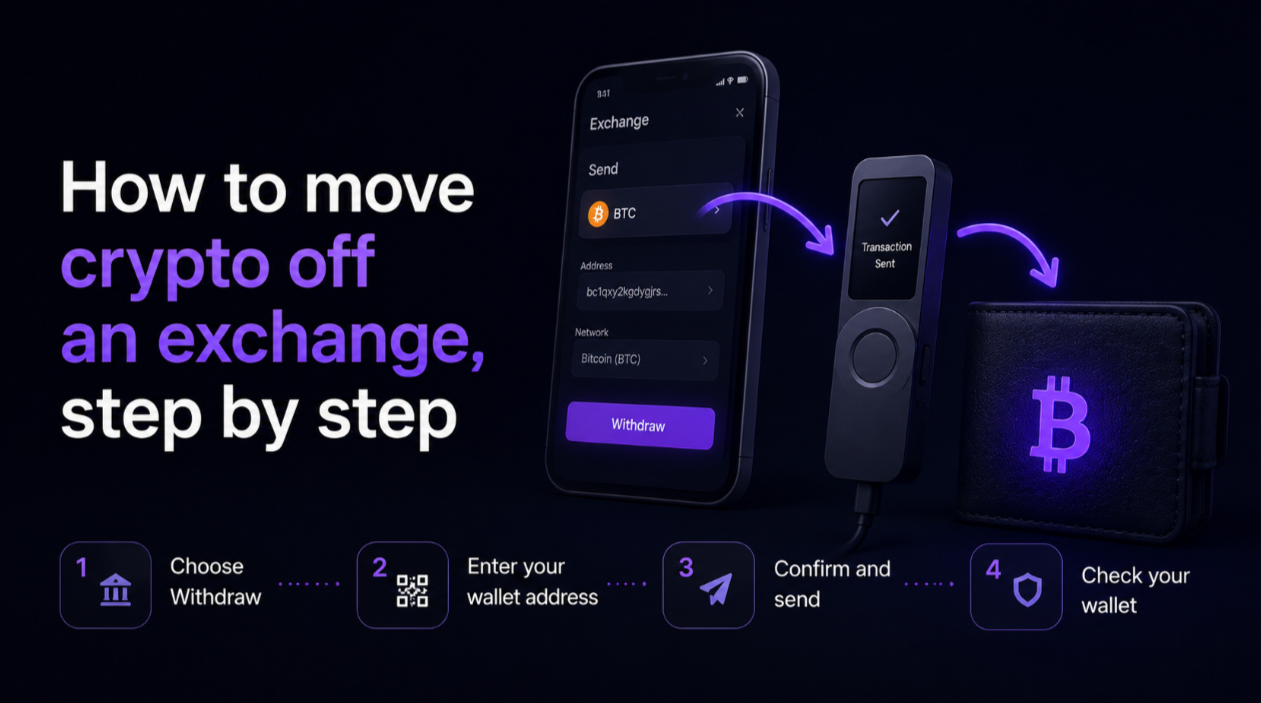
How to move crypto off an exchange, step by step
The withdrawal is the moment where irreversible mistakes happen. Five checks, in order, remove nearly all of them.

US Crypto Market Rallies as Senate Weighs Landmark CLARITY Act
Bitcoin neared $78,000 and Ethereum topped $2,500 as the crypto market gained 3% on September 15, with traders positioning ahead of a pivotal Senate cloture vote on the CLARITY Act.

Bitcoin Holds Near $78K as Senate Braces for Pivotal CLARITY Act Vote
Bitcoin trades near $77,500 as ETF outflows rise and the Fed decision looms — while the Senate's make-or-break cloture vote on the CLARITY Act arrives September 15

Fed Rate-Hike Bets and Iran Sanctions Crackdown Rattle U.S. Crypto Markets
Bitcoin and Ethereum slipped Tuesday as traders priced in a near two-thirds chance of a September Fed rate hike, while Washington widened its sanctions reach over Iran's crypto sector — a one-two punch of monetary and regulatory pressure hitting U.S. digital asset markets on the same day.