Guides and analysis
Read the chain
The context behind the headlines: plain-English guides to doing things safely, and analysis of how the market actually works. Pick the level that fits you — every piece names its author and its sources.
Start here
No prior knowledge assumed · 23 pieces
Guides Ethan Brooks·4d ago·9 min
How crypto staking actually works
The network pays one rate. Everything you can buy is that rate minus somebody's cut, and the cuts run from 8% to 29% — mostly undisclosed.
Ethan Brooks·4d ago·9 min
Analysis Priya Nair·6d ago·7 min
Who earns the interest on your stablecoins?
The issuer does, on hundreds of billions of dollars. It is the largest quiet transfer of value in this industry and almost nobody frames it as one.
Priya Nair·6d ago·7 min
AnalysisPriya Nair·Oct 31, 2026·7 min
Can a stablecoin issuer freeze your money?
Almost all of them can. The largest has done it billions of dollars at a time, and there is a public dashboard tracking it.
Priya Nair·Oct 31, 2026·7 min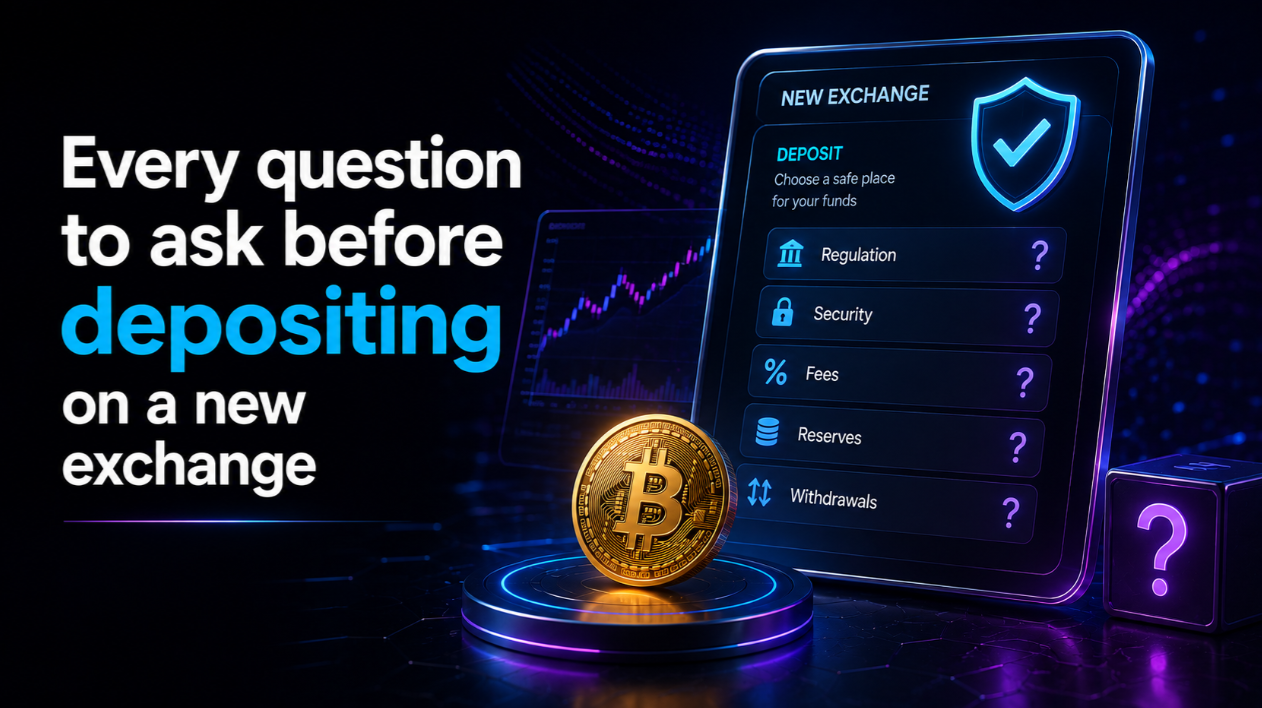
GuidesEthan Brooks·Oct 25, 2026·8 min
Every question to ask before depositing on a new exchange
You have chosen the venue. This is the half-hour of setup that decides whether an account compromise costs you everything or nothing.
Ethan Brooks·Oct 25, 2026·8 min
GuidesEthan Brooks·Oct 21, 2026·7 min
Why the same coin costs different amounts on different exchanges
There is no single price. There is a book on each venue, and the number you see on a price site is an average of places you are not trading.
Ethan Brooks·Oct 21, 2026·7 min
GuidesEthan Brooks·Oct 15, 2026·9 min
How to choose a crypto exchange: a checklist
Seven questions, ordered by how much each one costs you if you get it wrong. Fees come sixth.
Ethan Brooks·Oct 15, 2026·9 min
Guides Theo Walsh·Oct 7, 2026·7 min
What a hardware wallet actually protects you from
It stops a compromised computer from spending your coins. It does not stop you from approving a transaction that does exactly that.
Theo Walsh·Oct 7, 2026·7 min
AnalysisPriya Nair·Oct 5, 2026·8 min
Kraken vs Coinbase: which is right for you
One is cheaper and can prove its reserves. The other is a listed company available in every state. The choice is narrower than it looks.
Priya Nair·Oct 5, 2026·8 min
AnalysisTheo Walsh·Sep 25, 2026·8 min
Is Kraken safe? The evidence, and what it lacks
The strongest custody evidence in our table belongs to the venue that also tells you, in writing, that your balance is not insured.
Theo Walsh·Sep 25, 2026·8 min
AnalysisEthan Brooks·Sep 21, 2026·8 min
The real cost of a crypto card, once you price the stake
A headline cashback rate that requires locking up the issuer's own token is not a reward rate. It is a bet, and last year every one of those bets lost.
Ethan Brooks·Sep 21, 2026·8 min
AnalysisPriya Nair·Sep 19, 2026·8 min
Is Coinbase safe? What its own filings say
A listed company has to disclose risks its private competitors can leave unsaid. The most useful sentence about Coinbase is one Coinbase wrote.
Priya Nair·Sep 19, 2026·8 min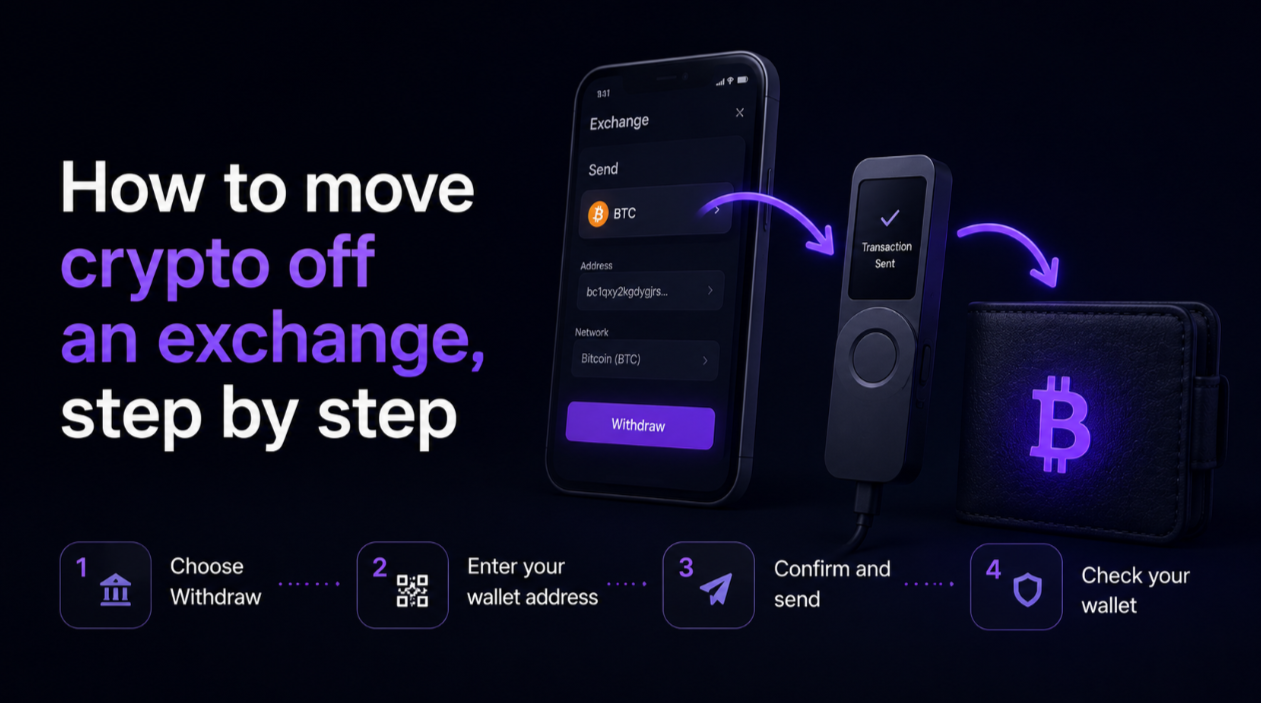
GuidesEthan Brooks·Sep 17, 2026·8 min
How to move crypto off an exchange, step by step
The withdrawal is the moment where irreversible mistakes happen. Five checks, in order, remove nearly all of them.
Ethan Brooks·Sep 17, 2026·8 min
AnalysisPriya Nair·Sep 13, 2026·8 min
Which crypto exchanges can Americans actually use?
State exclusions, separate US platforms with thinner books, and permanent injunctions. The venue you read about is often not the one you can open.
Priya Nair·Sep 13, 2026·8 min
GuidesEthan Brooks·Sep 11, 2026·9 min
How to buy bitcoin without overpaying
A first purchase carries four separate costs, and three of them are not shown as fees. Here is what each one is and how to keep it small.
Ethan Brooks·Sep 11, 2026·9 min
GuidesTheo Walsh·Sep 7, 2026·8 min
The seed phrase mistakes that cost people everything
Almost nobody loses a recovery phrase to a hacker. They lose it to a house move, a photograph, a fire, or a split so clever nobody could reassemble it.
Theo Walsh·Sep 7, 2026·8 min
GuidesTheo Walsh·Sep 5, 2026·8 min
Hardware wallet or software wallet: how to decide
The threshold is not an amount. It is whether you can read what you are being asked to sign — and that is a question about the device, not about you.
Theo Walsh·Sep 5, 2026·8 min
AnalysisEthan Brooks·Sep 3, 2026·8 min
What a $10,000 trade actually costs on each major exchange
We walked six live order books and priced the same trade on each. The gap between cheapest and dearest is more than six-fold, and none of it is visible on a fee page.
Ethan Brooks·Sep 3, 2026·8 min
GuidesEthan Brooks·Aug 30, 2026·9 min
Where should you actually keep your crypto?
Exchange, software wallet or hardware wallet — the decision is not about ideology. It is about how much you hold, how often you touch it, and what you can verify.
Ethan Brooks·Aug 30, 2026·9 min
Markets
How to read on-chain data for market timing: a beginner’s map
On-chain data reveals what crypto holders actually do, not what they say — and it describes the market rather than predicting price. A beginner's map to reading it well.
·Apr 26, 2026·12 min

SecurityEthan Brooks·Apr 23, 2026·13 min
Self-custody without footguns: a practical security checklist
Most crypto losses are process failures, not exotic hacks. A mechanism-first checklist for hardware wallets, seed backups, hot/cold separation, and the signing mistakes that actually drain wallets.
Ethan Brooks·Apr 23, 2026·13 min
Markets
A beginner’s guide to reading a token’s distribution
Price tells you what a token costs. Its distribution tells you who gets paid when it rises, and whether that person is you or an insider waiting on a cliff to unlock.
·Apr 14, 2026·10 min

SecurityEthan Brooks·Apr 8, 2026·11 min
How to set up your first hardware wallet, step by step
A calm, thorough walkthrough of setting up your first hardware wallet, from buying direct to testing recovery before you fund it, plus the beginner mistakes that quietly drain wallets.
Ethan Brooks·Apr 8, 2026·11 min
Markets
A guide to surviving your first bear market
Bull markets make money; bear markets decide whether you keep it. A mechanism-first field guide to drawdowns, psychology, leverage, position sizing, and staying solvent and sane.
·Apr 2, 2026·13 min
Going further
For readers who have used crypto · 23 pieces
AnalysisEthan Brooks·9h ago·8 min
Staking on an exchange: what it costs you
Coinbase pays retail 1.75% of a 2.473% network rate. The 29% it keeps is published nowhere.
Ethan Brooks·9h ago·8 min
AnalysisTheo Walsh·2d ago·8 min
What Ethereum staking really pays
2.473% gross — a number nobody advertises, because every product on sale is a subtraction from it.
Theo Walsh·2d ago·8 min
AnalysisEthan Brooks·Nov 4, 2026·8 min
What actually happens when a stablecoin depegs
Two breaks, two entirely different causes. One was reserves stuck in a failed bank; the other was a price feed reading the wrong order book.
Ethan Brooks·Nov 4, 2026·8 min
AnalysisEthan Brooks·Nov 2, 2026·8 min
USDT vs USDC: the difference in the evidence
A quarterly attestation and an audited public company are not the same instrument. Neither is the token that broke its peg the one you would guess.
Ethan Brooks·Nov 2, 2026·8 min
AnalysisEthan Brooks·Oct 29, 2026·10 min
Which stablecoin is safest to hold?
The comparisons rank on market cap and peg stability, and skip the two facts that decide the outcome: who can freeze your balance, and what kind of document the reserve report really is.
Ethan Brooks·Oct 29, 2026·10 min
AnalysisPriya Nair·Oct 27, 2026·9 min
What happened at every exchange that lost customer money
The incidents are the least interesting part. The question that separates these venues is what happened in the seventy-two hours afterwards.
Priya Nair·Oct 27, 2026·9 min
AnalysisEthan Brooks·Oct 19, 2026·8 min
What exchange insurance funds actually cover
Most cover futures liquidations, not theft. Several cannot be verified at all. One has genuinely paid out.
Ethan Brooks·Oct 19, 2026·8 min
GuidesTheo Walsh·Oct 17, 2026·7 min
Air-gapped wallets: when the extra step is worth it
A device that never connects to anything removes a whole class of attack, and adds friction to every single transaction. Both halves are real.
Theo Walsh·Oct 17, 2026·7 min
AnalysisPriya Nair·Oct 13, 2026·9 min
Is Binance safe to use?
A $4.3bn guilty plea, a proof of reserves it had to correct for overstating reserves, and a protection fund that has actually paid out. All three are true.
Priya Nair·Oct 13, 2026·9 min
AnalysisEthan Brooks·Oct 11, 2026·9 min
Which crypto exchange is cheapest, really
Published taker fees are only part of the price. We walked live order books at three trade sizes to find out where the two diverge.
Ethan Brooks·Oct 11, 2026·9 min
AnalysisEthan Brooks·Oct 9, 2026·8 min
The cheapest way to convert one coin into another
Every instant exchanger advertises 0% commission. One of them returns a literal zero in its API and charged us up to 2.3% below market on the same trade, at the same second.
Ethan Brooks·Oct 9, 2026·8 min
AnalysisEthan Brooks·Oct 3, 2026·8 min
MetaMask vs Rabby: what the free wallet charges
0.875% against 0.25% on every swap, a licence you can actually use, and a simulation screen that tells you what a transaction will do before you sign it.
Ethan Brooks·Oct 3, 2026·8 min
AnalysisTheo Walsh·Oct 1, 2026·9 min
Ledger vs Trezor: the difference that matters
One publishes its firmware and one does not. Almost everything else in this comparison is preference; that part is not.
Theo Walsh·Oct 1, 2026·9 min
GuidesEthan Brooks·Sep 29, 2026·10 min
The best way to hold bitcoin long term
Not a product list. A decision tree, with the amount that justifies each step up and the failure each step actually removes.
Ethan Brooks·Sep 29, 2026·10 min
AnalysisEthan Brooks·Sep 27, 2026·8 min
How to spot a fake proof of reserves
Four failure patterns, each with a named example currently live on a major exchange's website.
Ethan Brooks·Sep 27, 2026·8 min
AnalysisPriya Nair·Sep 23, 2026·9 min
What happens to your coins if an exchange goes bankrupt
The answer depends on a legal question most customers never ask: is that balance your property, or the company's?
Priya Nair·Sep 23, 2026·9 min
GuidesTheo Walsh·Sep 15, 2026·8 min
Token approvals: the permission that drains wallets
Most self-custody losses are not break-ins. They are permissions the owner granted, on a page that looked right, and never took back.
Theo Walsh·Sep 15, 2026·8 min
AnalysisEthan Brooks·Sep 9, 2026·7 min
What "not your keys, not your coins" leaves out
The slogan is correct and incomplete. Self-custody removes a counterparty and hands you a job — both halves deserve pricing before you act on it.
Ethan Brooks·Sep 9, 2026·7 min
GuidesEthan Brooks·Sep 1, 2026·8 min
How to check an exchange is really holding your money
Proof of reserves is the only tool a customer has for verifying a balance exists. Most published proofs do not survive a careful read — here is what separates the real ones.
Ethan Brooks·Sep 1, 2026·8 min
DeFiEthan Brooks·May 2, 2026·10 min
The case against chasing yield: where DeFi returns really come from
Every double-digit DeFi yield is a bill for a risk someone decided you should carry. Here is how to trace where the money actually comes from, and how to tell a real return from dilution in disguise.
Ethan Brooks·May 2, 2026·10 min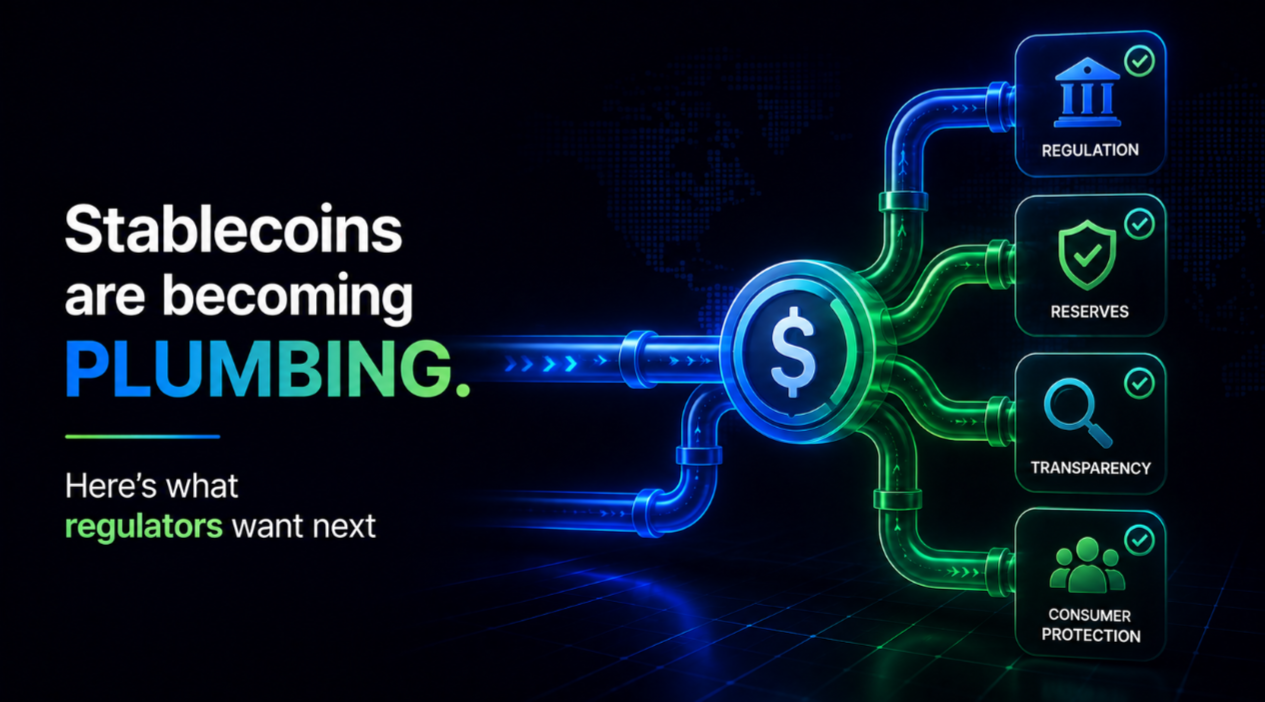
PolicyPriya Nair·Apr 20, 2026·12 min
Stablecoins are becoming plumbing. Here’s what regulators want next
Once a stablecoin settles real payments at scale, it stops being a trading chip and becomes financial infrastructure. That shift is what regulators are now writing rules to govern.
Priya Nair·Apr 20, 2026·12 min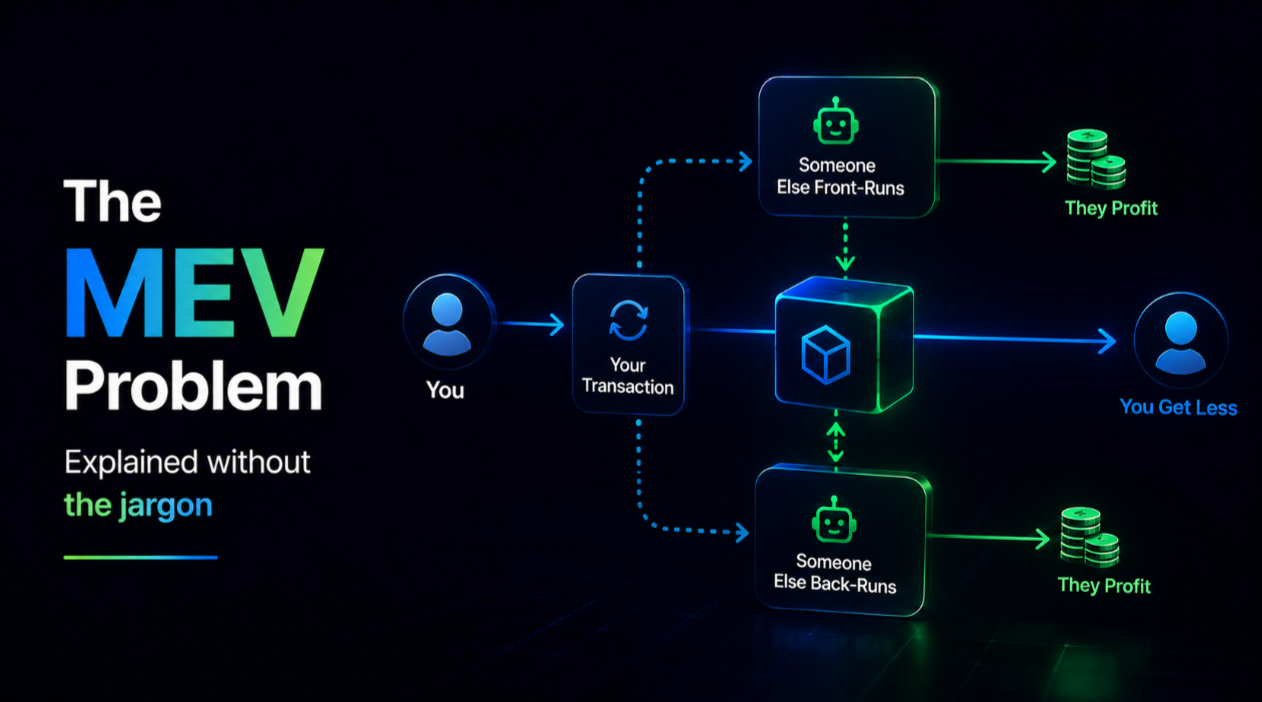
DeFiEthan Brooks·Apr 17, 2026·11 min
The MEV problem, explained without the jargon
Every on-chain trade passes through an invisible auction that decides how much value gets extracted from it. Here is how block-ordering power works, and how to defend against it.
Ethan Brooks·Apr 17, 2026·11 min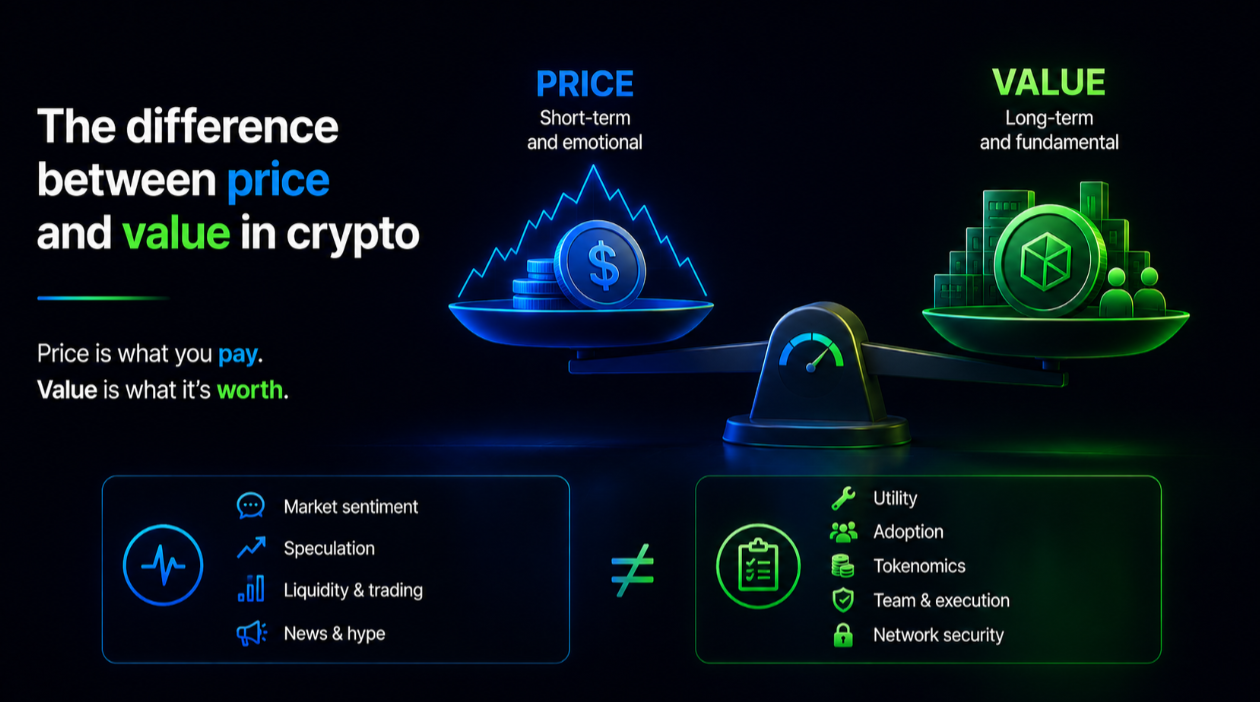
MarketsPriya Nair·Mar 30, 2026·12 min
The difference between price and value in crypto
Price is what the market quotes you today; value is what an asset can actually deliver. Confusing the two drives most bad decisions in crypto. Here is how to tell them apart.
Priya Nair·Mar 30, 2026·12 minIn depth
Mechanics, risk models, market structure · 4 pieces
GuidesTheo Walsh·Oct 23, 2026·8 min
Do you need a multisig wallet?
The threshold is the point where one recovery phrase becomes the weakest part of your setup — and where you will genuinely maintain three backups instead of one.
Theo Walsh·Oct 23, 2026·8 min
InfrastructureTheo Walsh·Apr 29, 2026·11 min
Why client diversity is the chain’s real decentralization metric
A network can boast tens of thousands of nodes and a healthy Nakamoto coefficient while resting on a single software point of failure. Client diversity is the metric that actually measures whether a chain can survive its own bugs.
Theo Walsh·Apr 29, 2026·11 min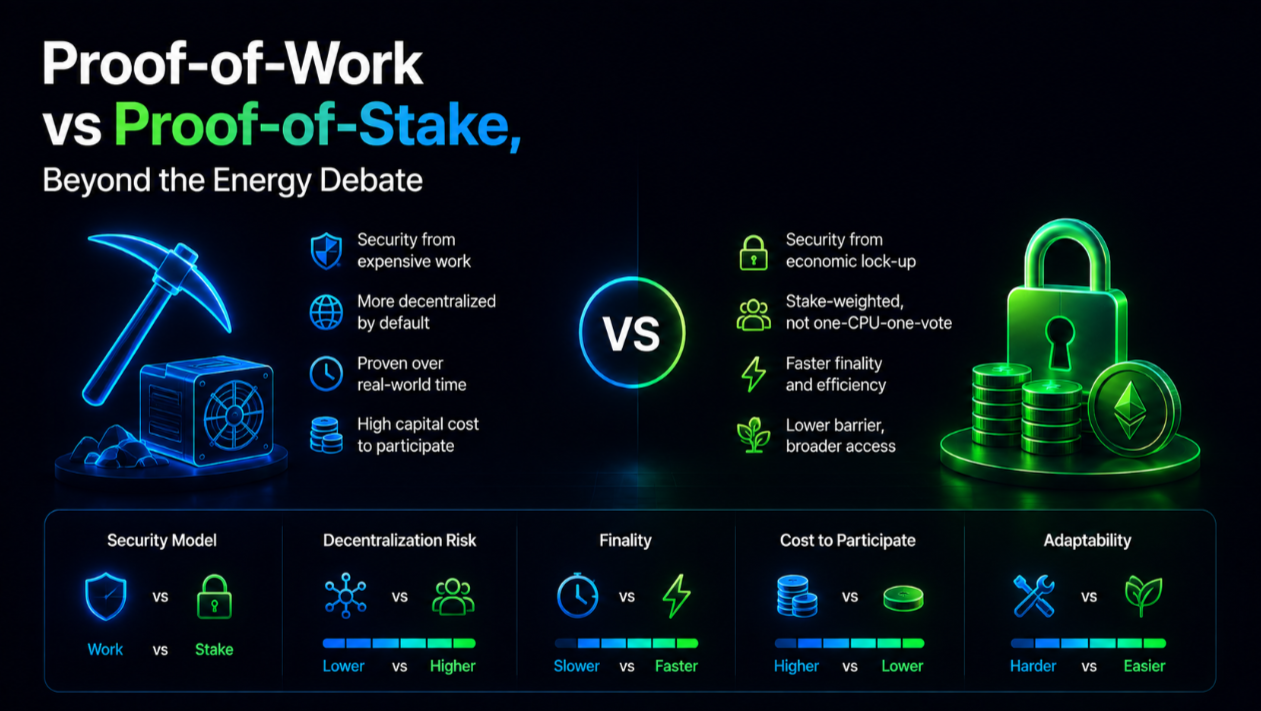
InfrastructureTheo Walsh·Apr 11, 2026·10 min
Proof-of-work versus proof-of-stake, beyond the energy debate
The real gap between proof-of-work and proof-of-stake isn't watts. It's where security comes from, how misbehavior is punished, who gets to participate, and how each holds up under censorship.
Theo Walsh·Apr 11, 2026·10 min
DeFiEthan Brooks·Apr 5, 2026·11 min
What restaking is, and the risk nobody likes to mention
Restaking lets the same staked ETH secure many services at once. The capital efficiency is real, and so is the correlated, systemic risk it quietly threads through DeFi.
Ethan Brooks·Apr 5, 2026·11 minBy topic
5 topicsCrypto Markets
34 storiesPrice action is the easy part; what moves it is the story. Our markets coverage tracks spot and derivatives flows, ETF creations and redemptions, stablecoin supply and the liquidity conditions that decide whether a move holds. Every number is sourced, and we say when the data is an estimate.
DeFi News & Analysis
7 storiesDecentralised finance rewards people who read the contract, not the marketing. We cover lending markets, DEX liquidity, restaking and real-world assets with a bias towards the mechanics — where the yield comes from, who can change the parameters, and what happens when the collateral falls.
Crypto Infrastructure
6 storiesThe plumbing decides what is possible above it. This is our coverage of base layers and rollups, bridges and sequencers, custody and settlement rails — upgrades that matter, outages that reveal how a system really works, and the trade-offs each design makes between speed, cost and trust.
Crypto Security
5 storiesMost losses are not exotic. We report exploits and exchange failures with the post-mortem detail that makes them useful — the attack path, the amount, the recovery — and pair them with practical guidance on keys, approvals and hardware wallets so the lesson survives the news cycle.
Crypto Policy & Regulation
5 storiesRegulation is written slowly and lands all at once. We follow the bills, consultations and enforcement actions shaping digital assets in the US, EU and Asia, reading the primary documents rather than the press release, and saying plainly what each one changes for exchanges, issuers and holders.