The best way to hold bitcoin long term
Not a product list. A decision tree, with the amount that justifies each step up and the failure each step actually removes.
The best way to hold bitcoin long term
Every recommendation about long-term bitcoin storage is really a claim about which failure you should be protecting against, and the honest answer changes with the amount. A setup that is right for $2,000 is careless at $200,000, and a setup that is right at $200,000 is a liability at $2,000 because its complexity is itself a risk.
Here is the ladder, with what each rung actually buys.
Rung 0: on the exchange
Correct only for the balance you are actively trading. A balance held by a company is a claim on that company, and only a minority of venues publish evidence that customer balances are backed — we walk through what that evidence looks like in how to check an exchange is holding your money.
For a long-term holding, this rung protects against nothing you actually face and exposes you to the one loss that is total.
Rung 1: a software wallet on a phone or computer
Removes the counterparty entirely. Introduces two new jobs: backing up a recovery phrase properly, and living with the fact that the keys sit on a device that browses the internet.
Reasonable for amounts where a total loss would be annoying rather than serious. Above that, the exposure is not theoretical: a compromised computer can sign a transaction without you.
Rung 2: a hardware wallet
This is the step that matters most, and it is cheap relative to what it protects. The keys never leave the device, and the device has a screen — so a compromised computer can propose a transaction but cannot complete one you did not read and approve.
The threshold for stepping up is not really an amount. It is whether the loss would change your life. Our hardware wallet rating is led by Coldcard Q for bitcoin-only holders, with Trezor Safe 5 the strongest open general-purpose device — fully open firmware and hardware, reproducible builds, an EAL6+ secure element.
Rung 3: fixing the backup, not the device
Most people stop at rung 2 and leave the real single point of failure untouched: one recovery phrase, on paper, in one building. A hardware wallet does nothing about a house fire.
- A metal backup, checked word for word against the device. Cheap, and it removes water and fire.
- A second copy in a different building, once the amount justifies the logistics.
- Or a threshold scheme — Cypherock X1 splits the seed across a device and four cards with a two-of-five threshold, so no single object can steal it and no single loss is fatal.
The seed phrase mistakes that cost people money almost all live on this rung, not the one above it.
Rung 4: multisig
Two of three keys, held in different places, sometimes with different people. It removes the single-key failure completely: no one device, one phrase or one location loses the coins, and no single compromise takes them.
It also adds real operational burden — three backups to maintain, a wallet descriptor that must itself be backed up, and a recovery process your heirs will not work out unaided. It is the right answer above the amount where a single-key mistake would be catastrophic, and the wrong answer below it, because complexity you do not maintain is a failure mode of its own.
What none of this protects against
Signing something you should not have. A hardware wallet stops a compromised computer; it does not stop you approving a malicious transaction on a page that looked right. That is a separate discipline, and for anything beyond simple bitcoin holding it is the more likely loss — see token approvals.
Every step up removes one failure and adds one job. Take the step when the failure outweighs the job, not before.
The short version
Move long-term holdings off the exchange. Buy a hardware wallet the moment a total loss would seriously hurt. Then spend your attention on the backup rather than the device, because that is where the losses actually happen. Consider multisig only when a single-key mistake would be catastrophic and you will genuinely maintain it. Test your recovery before you rely on it.
Frequently asked questions
What is the safest way to store bitcoin long term?+
A hardware wallet with a metal recovery-phrase backup, stored so that a single fire or flood cannot destroy every copy, and tested by performing a recovery before you rely on it. Above the amount where a single-key mistake would be catastrophic, a two-of-three multisig removes the remaining single point of failure.
How much bitcoin justifies a hardware wallet?+
The threshold is not an amount but a consequence: buy one as soon as losing the balance would seriously hurt. A device costs less than most people's monthly spending and removes the largest class of remote attack, so the answer is almost always sooner than people assume.
Do I need a multisig wallet?+
Only when a single-key failure would be catastrophic and you will actually maintain three backups and a wallet descriptor. Below that, multisig adds more operational risk than it removes — complexity you do not maintain is itself a failure mode, and inheritance becomes considerably harder.
Is a hardware wallet enough on its own?+
No. It protects the key from a compromised computer, and does nothing about a badly stored recovery phrase, a house fire, or a malicious transaction you approve yourself. Most real-world losses happen in those three places rather than in the device.
How this was reported
ChainWatch Daily is independent and reader-funded. Stories are written by named journalists and checked against primary sources before publishing. We disclose holdings, correct errors in the open, and never accept payment for coverage.
More like this
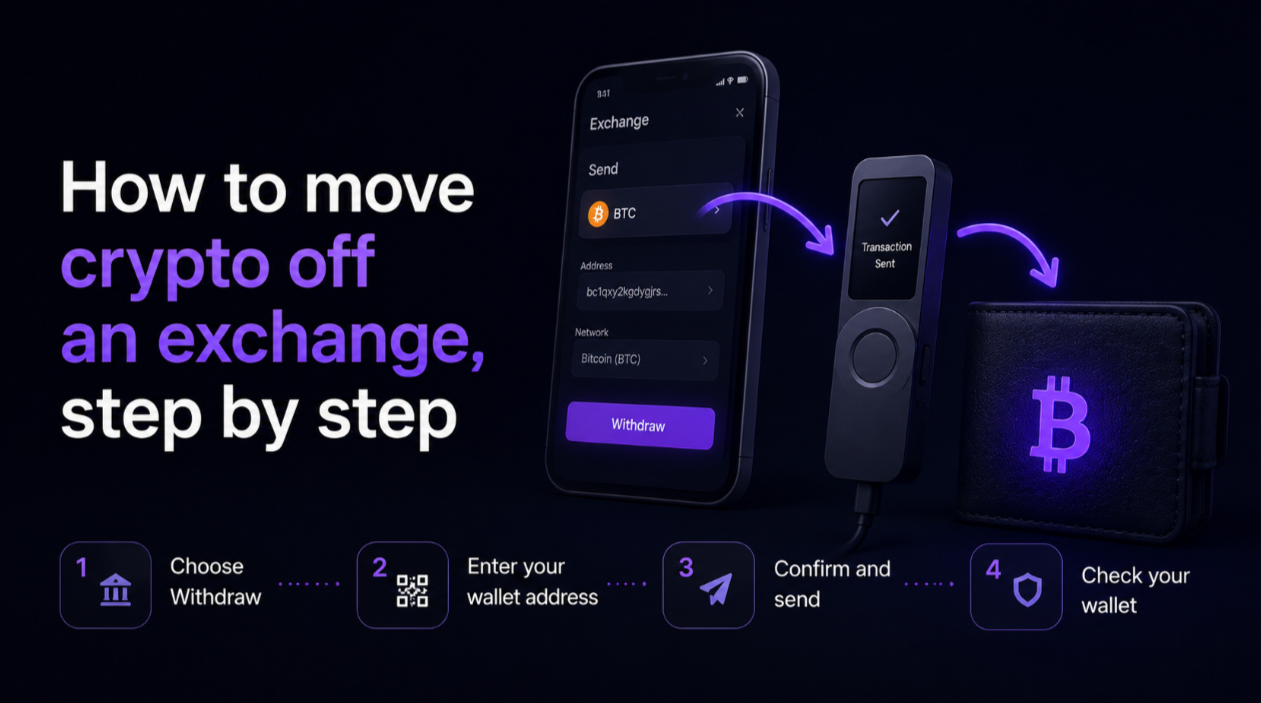
How to move crypto off an exchange, step by step
The withdrawal is the moment where irreversible mistakes happen. Five checks, in order, remove nearly all of them.
Token approvals: the permission that drains wallets
Most self-custody losses are not break-ins. They are permissions the owner granted, on a page that looked right, and never took back.

How to buy bitcoin without overpaying
A first purchase carries four separate costs, and three of them are not shown as fees. Here is what each one is and how to keep it small.