Digital Asset Markets & Crypto Infrastructure
Theo Walsh
Theo Walsh is a U.S.-based Senior Editor specializing in digital asset markets and crypto infrastructure, with a focus on the evolving relationship between blockchain technology, financial markets, and institutional adoption. He covers Bitcoin, stablecoins, tokenomics, market structure, custody solutions, and the infrastructure powering the next generation of digital finance. Theo analyzes how market trends, regulatory developments, and blockchain innovations influence liquidity, adoption, and long-term industry growth. His work explores stablecoin ecosystems, exchange infrastructure, market mechanics, risk management, and the practical applications of decentralized financial technologies. Known for combining technical accuracy with accessible reporting, Theo transforms complex crypto concepts into clear, data-driven analysis for investors, professionals, and readers seeking a deeper understanding of digital asset markets and the rapidly evolving blockchain ecosystem.

Beats
Bitcoin markets, stablecoins, crypto market structure, tokenomics, digital asset infrastructure, institutional adoption, and blockchain risk analysis.
Latest by Theo · 13 stories
Bitget loses $351.6m — and the fund it says covers it is one we could not verify
The largest exchange theft of 2026 came through spoofed transfers, not stolen keys. Bitget says a $464m protection fund absorbs it. We reviewed that fund before the hack: genuinely scoped to theft, and impossible to check.
Is Kraken safe? The evidence, and what it lacks
The strongest custody evidence in our table belongs to the venue that also tells you, in writing, that your balance is not insured.
Token approvals: the permission that drains wallets
Most self-custody losses are not break-ins. They are permissions the owner granted, on a page that looked right, and never took back.

Bitcoin Drops Below $79K as Senate Prepares Make-or-Break CLARITY Act Vote
Bitcoin slipped under $79,000 on strong U.S. jobs data while Washington gears up for a critical September 15 Senate vote on the CLARITY Act — a pivotal week for U.S. crypto markets and regulation.

The seed phrase mistakes that cost people everything
Almost nobody loses a recovery phrase to a hacker. They lose it to a house move, a photograph, a fire, or a split so clever nobody could reassemble it.

Hardware wallet or software wallet: how to decide
The threshold is not an amount. It is whether you can read what you are being asked to sign — and that is a question about the device, not about you.

A major layer-2 finalizes its move to a permissionless prover set
One of Ethereum's largest layer-2 networks has opened validity-proof generation to anyone, retiring the single trusted prover that quietly sat at the center of its trust model. The change is incremental, but it removes a real chokepoint and sharpens the questions about what remains centralized.

Validators flag client-diversity risk after a single client nears supermajority
Validators are warning that one software client is edging toward a supermajority of the network — a concentration that could turn a single bug into a chain-wide failure. Here is the mechanism, the thresholds that matter, and how operators can pull the system back from the edge.

Account-abstraction wallets pass a usage milestone
Smart-account wallets have crossed a usage milestone, pushing account abstraction from a developer experiment toward a default way people hold crypto. Here is what changes, and what still doesn't.

Cross-chain bridge resumes operations after a security audit
A cross-chain bridge is back online after pausing for a security audit. The restart is a good moment to understand why bridges concentrate so much risk, how their trust models actually work, and what an audit can and cannot promise.

Developer activity climbs across several major ecosystems
Developer activity is rising across several major blockchain ecosystems, a fundamental signal that often runs ahead of price. Here is how it is measured, where the metrics mislead, and why building through a downturn tends to precede the next cycle.

Why client diversity is the chain’s real decentralization metric
A network can boast tens of thousands of nodes and a healthy Nakamoto coefficient while resting on a single software point of failure. Client diversity is the metric that actually measures whether a chain can survive its own bugs.
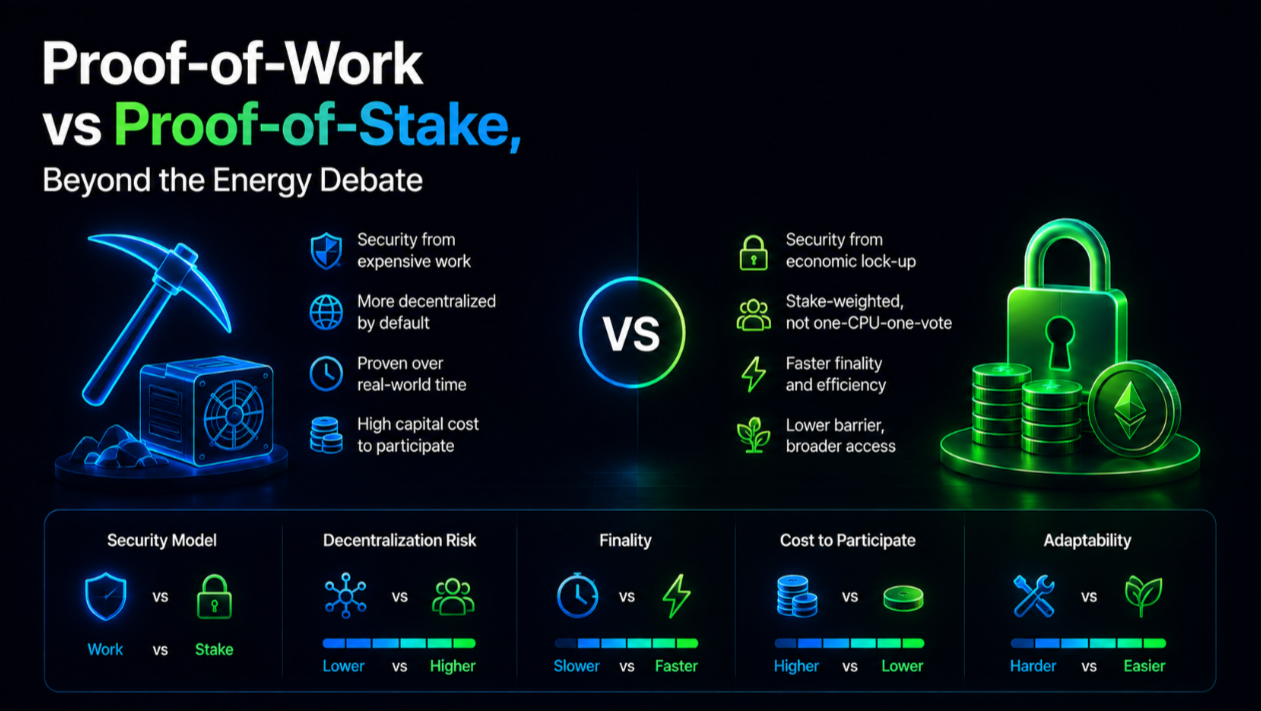
Proof-of-work versus proof-of-stake, beyond the energy debate
The real gap between proof-of-work and proof-of-stake isn't watts. It's where security comes from, how misbehavior is punished, who gets to participate, and how each holds up under censorship.
Fact-checked by Theo · 7
How to spot a fake proof of reserves
Four failure patterns, each with a named example currently live on a major exchange's website.

The real cost of a crypto card, once you price the stake
A headline cashback rate that requires locking up the issuer's own token is not a reward rate. It is a bet, and last year every one of those bets lost.

Is Coinbase safe? What its own filings say
A listed company has to disclose risks its private competitors can leave unsaid. The most useful sentence about Coinbase is one Coinbase wrote.
Senate blocks the CLARITY Act 49–50, leaving market structure to the regulators
Cloture on the motion to proceed failed eleven votes short of sixty. The Democrats who negotiated the text voted against opening debate on it.

How to buy bitcoin without overpaying
A first purchase carries four separate costs, and three of them are not shown as fees. Here is what each one is and how to keep it small.

What a $10,000 trade actually costs on each major exchange
We walked six live order books and priced the same trade on each. The gap between cheapest and dearest is more than six-fold, and none of it is visible on a fee page.