How crypto staking actually works
The network pays one rate. Everything you can buy is that rate minus somebody's cut, and the cuts run from 8% to 29% — mostly undisclosed.
- Published
- Nov 8, 2026
- Reading time
- 9 min
- Fact-checked by
 ✓ Theo Walsh
In this article
7 partsStaking means locking coins to help secure a proof-of-stake network, which pays you for doing it. That much is simple. What is not simple is that the network pays one rate, nobody advertises it, and every product you can buy is that rate minus a cut you usually have to derive yourself.
The number nobody publishes
Ethereum currently pays about 2.473% gross. We had to work that out from Lido's published formula against its live API, because no platform states it — every product quotes its own net figure, and without the gross number you cannot see what is being taken.
Solana's gross rate is around 6.11%. Same principle: the network's rate is the ceiling, and every arrangement below it is a subtraction.
Where the yield comes from
Two sources: newly issued coins, and a share of transaction fees. Both are paid by the network to validators who propose and attest blocks correctly.
This matters because it means staking yield is not free money and not a business return. It is partly dilution — the network issuing new supply — which is why a headline percentage on a network with high issuance is worth less than it looks.
The three ways to do it
Run your own validator
32 ETH and a machine that stays online. You keep the full 2.473% and pay no commission to anyone. You also carry every operational risk yourself: downtime penalties, and slashing if your setup does something the protocol punishes.
Stake through a custodian
An exchange stakes on your behalf. Simple, no minimum, and the most expensive. Coinbase pays retail about 1.75% against the network's 2.473% — an implied take of roughly 29%, published nowhere. Kraken's own support page states that in-app APYs "do not include Kraken's commission", which is honest and still means the number you see is not the number you get.
Liquid staking
Deposit coins, receive a token representing the staked position, keep the ability to trade or use it elsewhere. Lido charges 10% of yield and — to its credit — its advertised APR is already net of that fee, with the formula in its documentation and the same number returned by its public API.
The catch in this category is not fees. It is depth: see is liquid staking actually liquid.
The risks that are not the yield
- Slashing. The protocol destroys part of a stake for provable misbehaviour. Rare, and whose capital absorbs it varies by arrangement.
- Unbonding time. Exiting is not instant. During a queue you hold an asset you cannot sell and cannot use.
- Counterparty. A custodian holds the keys. A liquid staking protocol holds them in a contract. Both are claims rather than possession.
- Depth, for liquid staking tokens. A token that is fully backed and has no buyers is not liquid, and that has been the expensive failure in this category rather than fees.
The proportion worth keeping in mind
At around 2.2% net, the staking decision is roughly a hundredth as important as the decision to hold the asset at all. The spread between the better platforms is tens of basis points.
So the useful question is not which platform pays most. It is which one you would rather have holding the keys — and whether the yield justifies the counterparty at all. Our staking platforms rating is built around that framing.
The network pays 2.473%. Every product is that number minus somebody's cut, and the largest custodians disclose their cut the least clearly.
The short version
Find the network's gross rate, then work out what your provider keeps. Solo staking keeps all of it and demands competence; custodians take between 8% and 29% and mostly do not say; liquid staking sits in between and adds a depth risk that has cost more money than any fee. At these rates, prioritise who holds the keys over who quotes the highest number.
Frequently asked questions
4 questionsHow does crypto staking work?
You lock coins to help secure a proof-of-stake network, and the network pays you from newly issued coins and a share of transaction fees. Ethereum currently pays about 2.473% gross. Every product you can buy — custodial staking, liquid staking — hands you that rate minus a commission.
How much does staking actually pay?
Ethereum's gross rate is about 2.473% and Solana's about 6.11%, though neither is advertised. What you receive depends on the provider: solo staking keeps all of it, Lido charges 10% of yield, and Coinbase pays retail roughly 1.75% — an implied take of about 29%.
Is staking crypto risky?
The main risks are not the yield. Slashing destroys part of a stake for provable validator misbehaviour; unbonding queues mean exit is not instant; custodial and liquid staking both make your position a claim rather than possession; and liquid staking tokens can be fully backed with almost no buyers.
What is the difference between staking on an exchange and liquid staking?
An exchange holds the keys and pays you a net rate, typically after the largest commission in the market. Liquid staking gives you a token representing the position that you can trade or use elsewhere, for a lower fee — at the cost of depending on that token having buyers when you want to exit.
About the author
Ethan Brooks is a U.S.-based Senior Crypto Analyst at ChainWatch with nearly a decade of experience analyzing digital asset markets, blockchain data, and institutional trading activity.
How this was reported
ChainWatch Daily is independent and reader-funded. Stories are written by named journalists and checked against primary sources before publishing. We disclose holdings, correct errors in the open, and never accept payment for coverage. This article is information, not financial advice.
More like this
Every question to ask before depositing on a new exchange
You have chosen the venue. This is the half-hour of setup that decides whether an account compromise costs you everything or nothing.
 Ethan Brooks·Oct 25, 2026·8 min
Do you need a multisig wallet?
The threshold is the point where one recovery phrase becomes the weakest part of your setup — and where you will genuinely maintain three backups instead of one.
Theo Walsh·Oct 23, 2026·8 min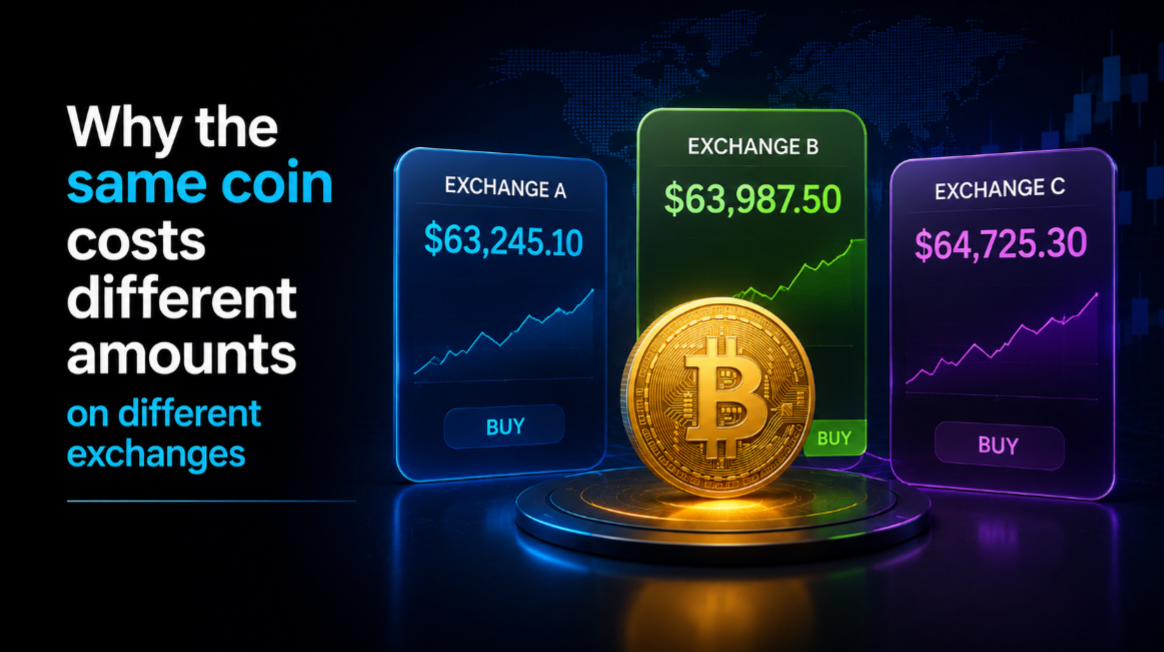
Why the same coin costs different amounts on different exchanges
There is no single price. There is a book on each venue, and the number you see on a price site is an average of places you are not trading.
Ethan Brooks·Oct 21, 2026·7 min