Why the same coin costs different amounts on different exchanges
There is no single price. There is a book on each venue, and the number you see on a price site is an average of places you are not trading.
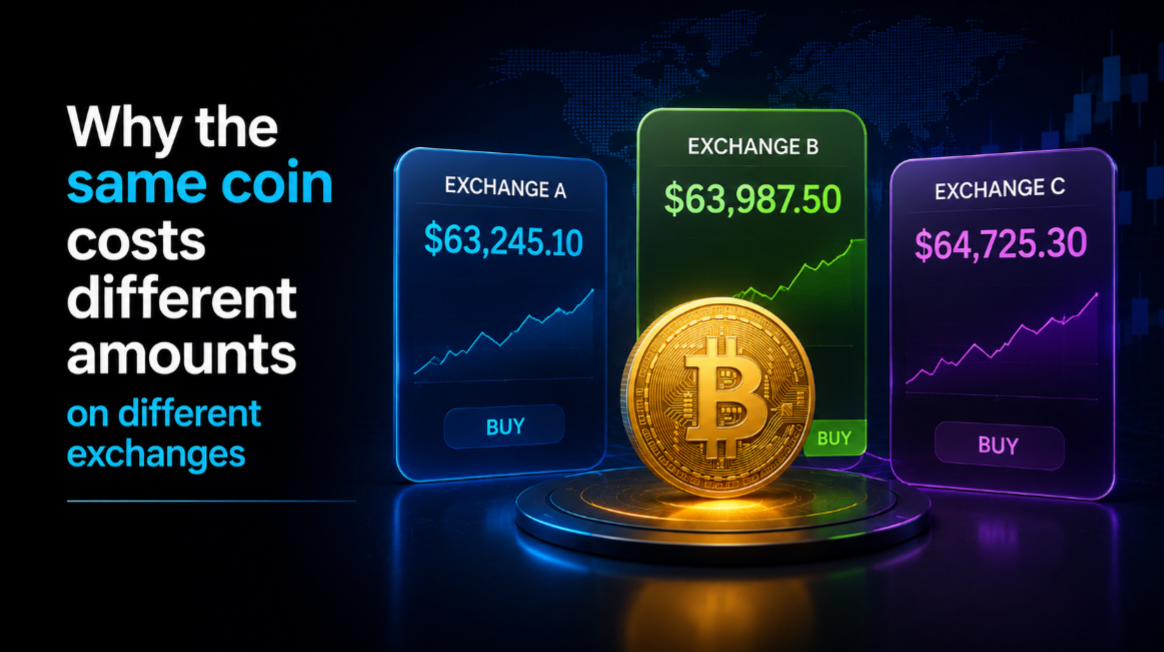
Why the same coin costs different amounts on different exchanges
There is no such thing as the price of bitcoin. There is a price on each venue, set by that venue's own order book, and a price site shows you a volume-weighted average across many of them — a number nobody can actually trade at.
When we captured live order books across seventeen exchanges at the same moment, the best ask for bitcoin ranged from about $62,785 to $62,900. Roughly a fifth of a percent, at the same second, for the same asset.
Where the difference comes from
Separate books
Each exchange matches its own buyers and sellers. Arbitrage traders keep the books close together, but not identical: moving money between venues takes time and costs fees, so a small gap persists because closing it is not worth anyone's while.
The quote currency
Some venues price bitcoin in dollars and others in a stablecoin. Those are different instruments. If the stablecoin itself is trading slightly off its peg, the quoted price shifts with it — which is one reason USD-quoted and USDT-quoted venues cluster separately.
Spread
The gap between the best buy and best sell price. On deep venues it was effectively zero in our measurement; on thinner ones we saw a spread of around 0.026%, which you pay on entry and again on exit.
Depth
How much is available near the best price. Within half a per cent of the top of the book, some venues showed hundreds of bitcoin and others under twenty. That does not affect a small trade at all, and it decides what a large one costs.
What this means in practice
- For retail-sized trades, the price differences between major venues are trivial compared with the fee differences. Effective cost ranged from about 0.057% to 0.60% across the venues we measured — that gap is fees, not prices.
- The price you see on a chart is not the price you will get. Your price is the best offer on your venue, plus the fee, plus any slippage.
- The apparent arbitrage between venues is almost never available to retail. By the time you have deposited, traded and withdrawn, the fees and the delay have consumed it — and that is before considering whether both venues will let you move money quickly.
- A venue with a persistently better price and no depth is not offering you a better price.
The number that actually matters
Not the quoted price but the effective cost: what you pay against the market mid-price, all in. That is the measurement in our exchange rating, and it is the reason Coinbase at 0.60% is six times more expensive than the cheapest venues at 0.10% despite quoting almost the same bitcoin price.
The price differences between exchanges are a rounding error. The fee differences are six-fold.
The short version
Prices differ because each exchange runs its own book, quotes in its own currency, and has its own depth. At retail sizes those differences are far smaller than the fee differences, so compare effective cost rather than quoted price — and treat cross-venue arbitrage as something that has already been done by people faster than you.
Frequently asked questions
Why is bitcoin a different price on different exchanges?+
Each exchange runs its own order book, so the price is set by its own buyers and sellers. Arbitrage keeps venues close but not identical, because moving money between them costs time and fees. In our snapshot across seventeen venues, the best ask varied by about 0.2% at the same second.
Can I make money from price differences between exchanges?+
Almost never at retail. The gaps are a fraction of a per cent and are consumed by trading fees, withdrawal fees and the delay involved in moving funds — during which the gap usually closes. Professional arbitrage requires capital pre-positioned on both venues.
What is the spread on a crypto exchange?+
The gap between the highest price a buyer will pay and the lowest a seller will accept. On deep venues it was effectively zero in our measurement; on thinner ones we saw around 0.026%, which you pay entering a position and again leaving it.
Which price is the real crypto price?+
None of them individually. Price sites show a volume-weighted average across many venues, which is useful as a benchmark and is not tradeable. The price relevant to you is the best offer on your exchange, plus its fee and any slippage — the effective cost.
How this was reported
ChainWatch Daily is independent and reader-funded. Stories are written by named journalists and checked against primary sources before publishing. We disclose holdings, correct errors in the open, and never accept payment for coverage.
More like this
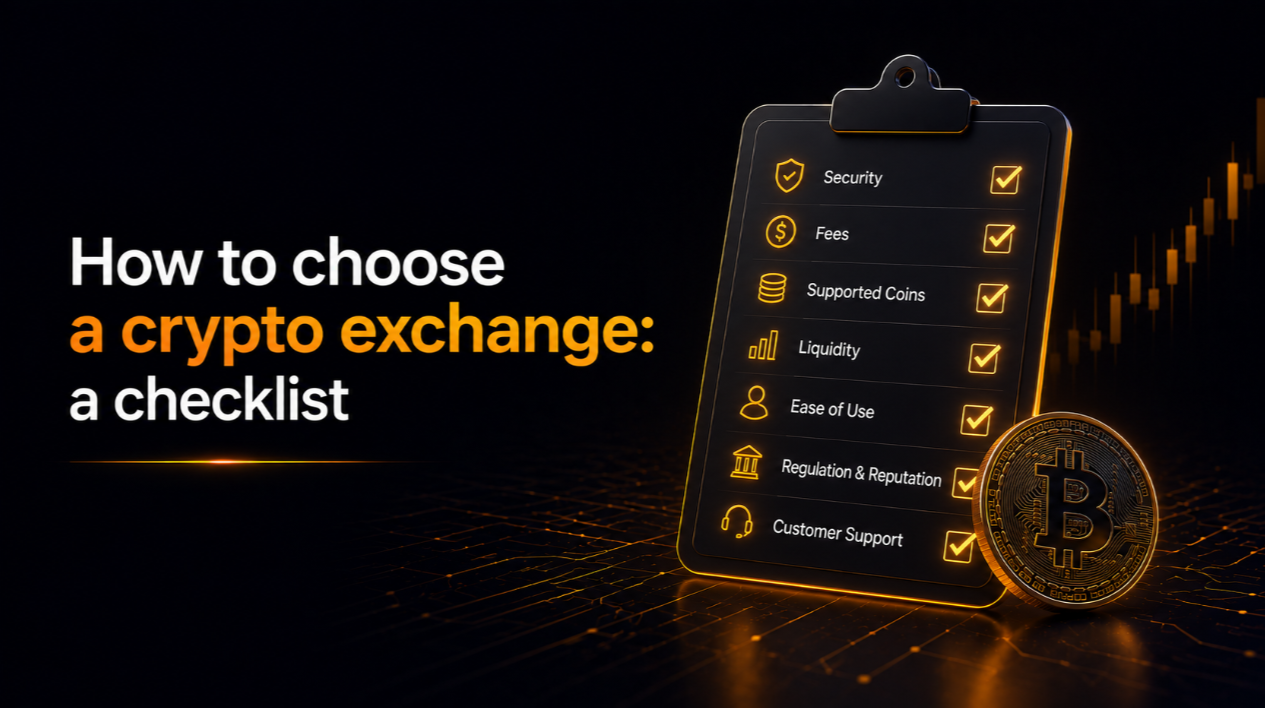
How to choose a crypto exchange: a checklist
Seven questions, ordered by how much each one costs you if you get it wrong. Fees come sixth.
Air-gapped wallets: when the extra step is worth it
A device that never connects to anything removes a whole class of attack, and adds friction to every single transaction. Both halves are real.

What a hardware wallet actually protects you from
It stops a compromised computer from spending your coins. It does not stop you from approving a transaction that does exactly that.