How to choose a crypto exchange: a checklist
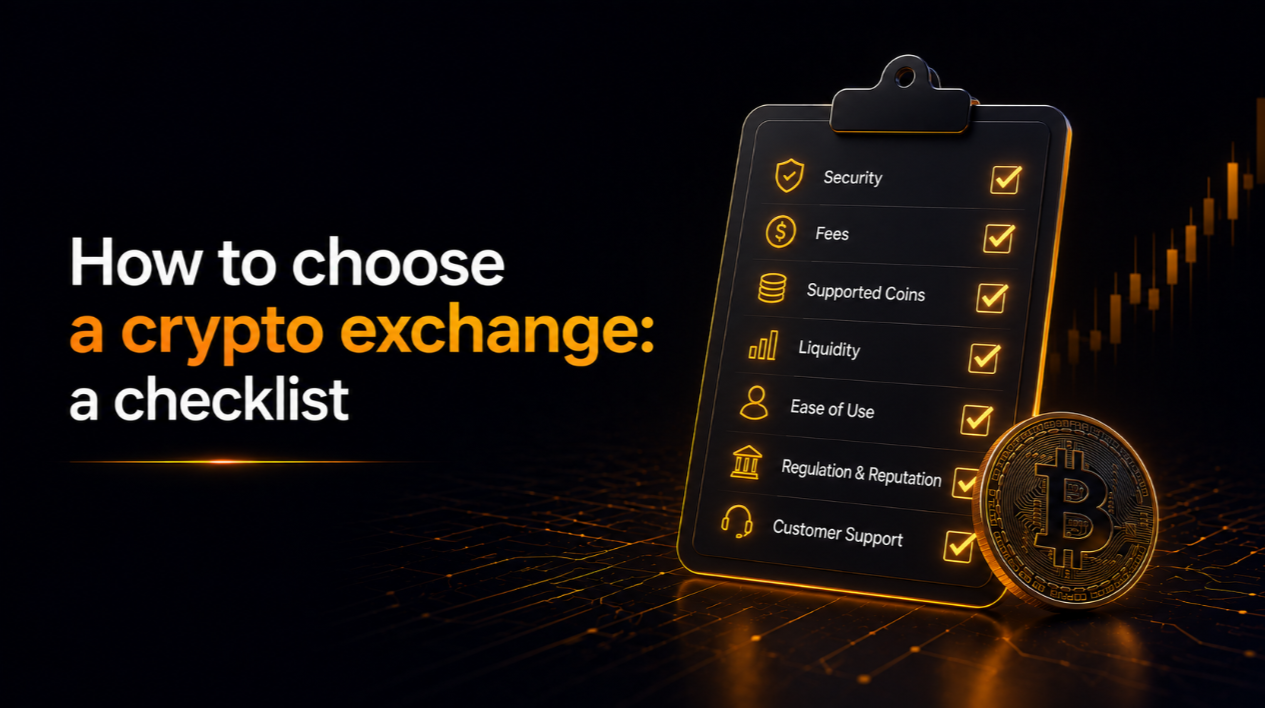
Seven questions, ordered by how much each one costs you if you get it wrong. Fees come sixth.
How to choose a crypto exchange: a checklist
Almost every exchange comparison sorts by fees, which is the same as ranking banks by the free gift they give you for opening an account. The fee difference between the cheapest and most expensive major venue is real money — around $50 on a $10,000 trade — and it is two orders of magnitude smaller than what a custody failure costs on the same balance.
So here are the questions in the order that matters. Each one is answered per venue in our exchange rating.
1. Can it prove it holds what it owes?
A real proof of reserves states total customer liabilities, is attested by a named third party, runs on a stated cadence, and lets you verify your own balance is inside the total. Assets alone prove nothing — see how to spot a fake proof of reserves.
Of the 29 venues we researched, only a minority clear this. It is the single most informative question you can ask.
2. Can it legally serve you where you live?
Check your state or country specifically, not just the country in general. Several venues serve 49 US states and exclude New York; several route Americans to a separate entity with a thinner order book; one is permanently enjoined from serving US persons. The details are in which exchanges Americans can actually use.
3. What is its legal structure?
In an insolvency, this decides whether your balance is your property or the company's asset. A chartered trust company examined by a banking regulator is the strongest form in this market. A public company with audited accounts is a different strength. An offshore operating company with terms of service is the weakest, and it is the most common.
4. What happened last time something went wrong?
Every venue of any size has had an incident. What separates them is the aftermath: were users made whole, how fast, and from what source of funds. A protection fund with a published address and a payout in its history is worth more than one described only in marketing copy — see what exchange insurance funds actually cover.
5. What will it cost to get money in and out?
For infrequent buyers, deposit and withdrawal costs exceed trading fees entirely. A venue with a 0.10% trading fee and an expensive, opaque set of fiat rails is more expensive than one at 0.26% with free bank transfers. Check whether the deposit methods are published with their costs, or revealed at the moment you deposit.
6. What does trading actually cost?
Now the fees. At retail sizes, published taker fees are effectively the whole price — our order-book measurements found slippage negligible below $100,000 at every major venue. Compare taker rates and ignore maker rates unless you place limit orders. And use the advanced trading interface, not the one-click buy button, which prices at a spread on every platform.
7. Can you get answers when something breaks?
Published uptime history, documented API rate limits, stated withdrawal limits and a support channel that reaches humans. These are unglamorous and they are what you will care about on the day a withdrawal does not arrive. Their absence at a venue of any size is informative.
The five-minute version
- Find the proof of reserves page. Check it names liabilities, an attestor and a date within the last few months.
- Find your jurisdiction in the terms of service.
- Search for the venue's name plus 'enforcement' or 'settlement'.
- Look up the deposit and withdrawal fee schedule before you sign up.
- Compare the taker fee against the alternatives that survived the first three steps.
Optimising for a $50 fee difference while ignoring a $10,000 custody question is the most expensive habit in this market.
The short version
Filter first on what a venue can prove about customer funds and whether it can legally serve you. Then look at incident history and fiat rails. Only then compare fees, among the venues that survived. And whatever you choose, keep only a working balance there.
Frequently asked questions
How do I choose a crypto exchange?+
Answer seven questions in order of consequence: can it prove it holds what it owes, can it legally serve you, what is its legal structure, what happened after past incidents, what do deposits and withdrawals cost, what does trading cost, and can you get support. Fees belong sixth, not first.
What should I check before depositing on a new exchange?+
Find its proof of reserves page and confirm it names total liabilities, a third-party attestor and a recent date. Locate your jurisdiction in its terms of service. Search for enforcement actions against it. Read the deposit and withdrawal fee schedule. Those four checks take about five minutes.
Are low fees a good reason to pick an exchange?+
Only as a tiebreaker among venues that already pass on custody evidence and availability. The difference between the cheapest and most expensive major venue is roughly $50 on a $10,000 trade; a custody failure on the same balance costs $10,000. Our rating weights cost at 15% and custody evidence at 40%.
How many exchanges should I use?+
At least two if you hold a significant balance, because custodial failure is total for the venue it happens to and uncorrelated across venues. Keep only what you are actively trading on any of them, and hold long-term positions in a wallet you control.
How this was reported
ChainWatch Daily is independent and reader-funded. Stories are written by named journalists and checked against primary sources before publishing. We disclose holdings, correct errors in the open, and never accept payment for coverage.
More like this

What a hardware wallet actually protects you from
It stops a compromised computer from spending your coins. It does not stop you from approving a transaction that does exactly that.
The best way to hold bitcoin long term
Not a product list. A decision tree, with the amount that justifies each step up and the failure each step actually removes.
How to move crypto off an exchange, step by step
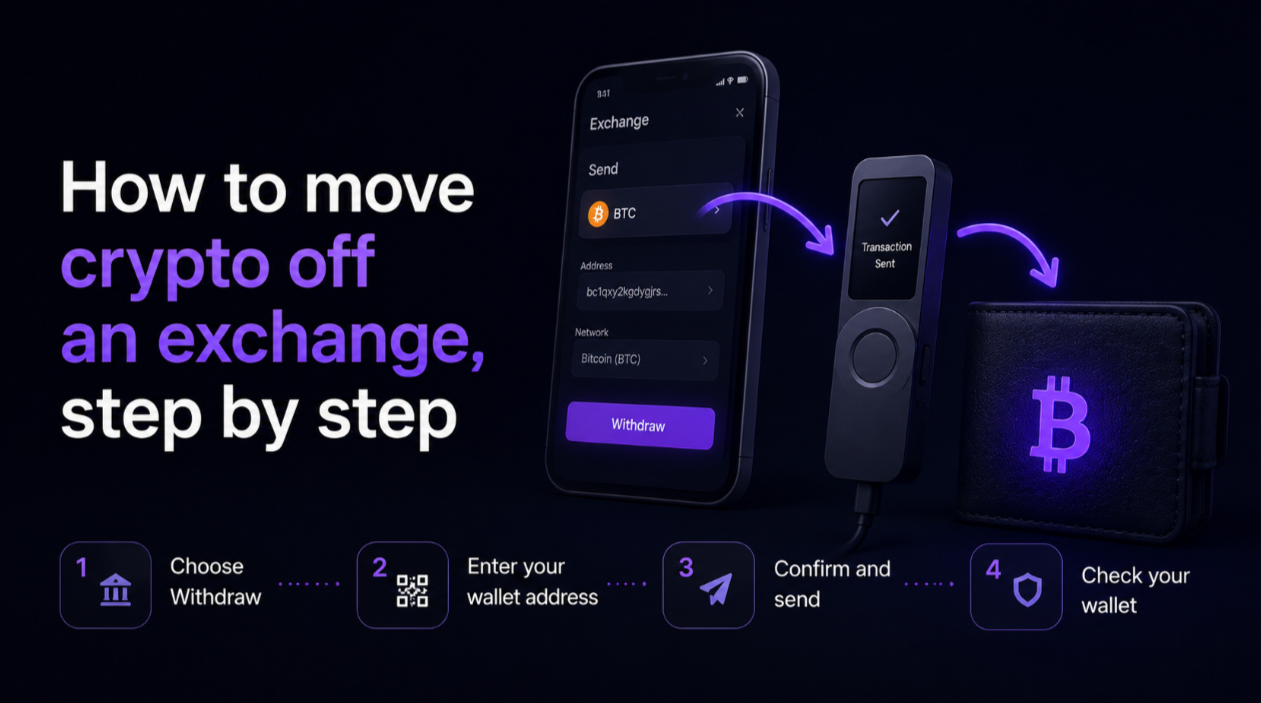
The withdrawal is the moment where irreversible mistakes happen. Five checks, in order, remove nearly all of them.