WLFI Halves to a Record Low and USD1 Briefly Slips to 94 Cents as Justin Sun Demands Delisting
World Liberty Financial's WLFI token fell more than 50% in 24 hours to a record low near $0.016, its USD1 stablecoin briefly traded at about $0.94, and a reserve wallet sold roughly $20 million of ETH. Justin Sun alleges insider wrongdoing; none of it is proven.
- Published
- Nov 29, 2026
- Reading time
- 5 min
- Fact-checked by
 ✓ Priya Nair
In this article
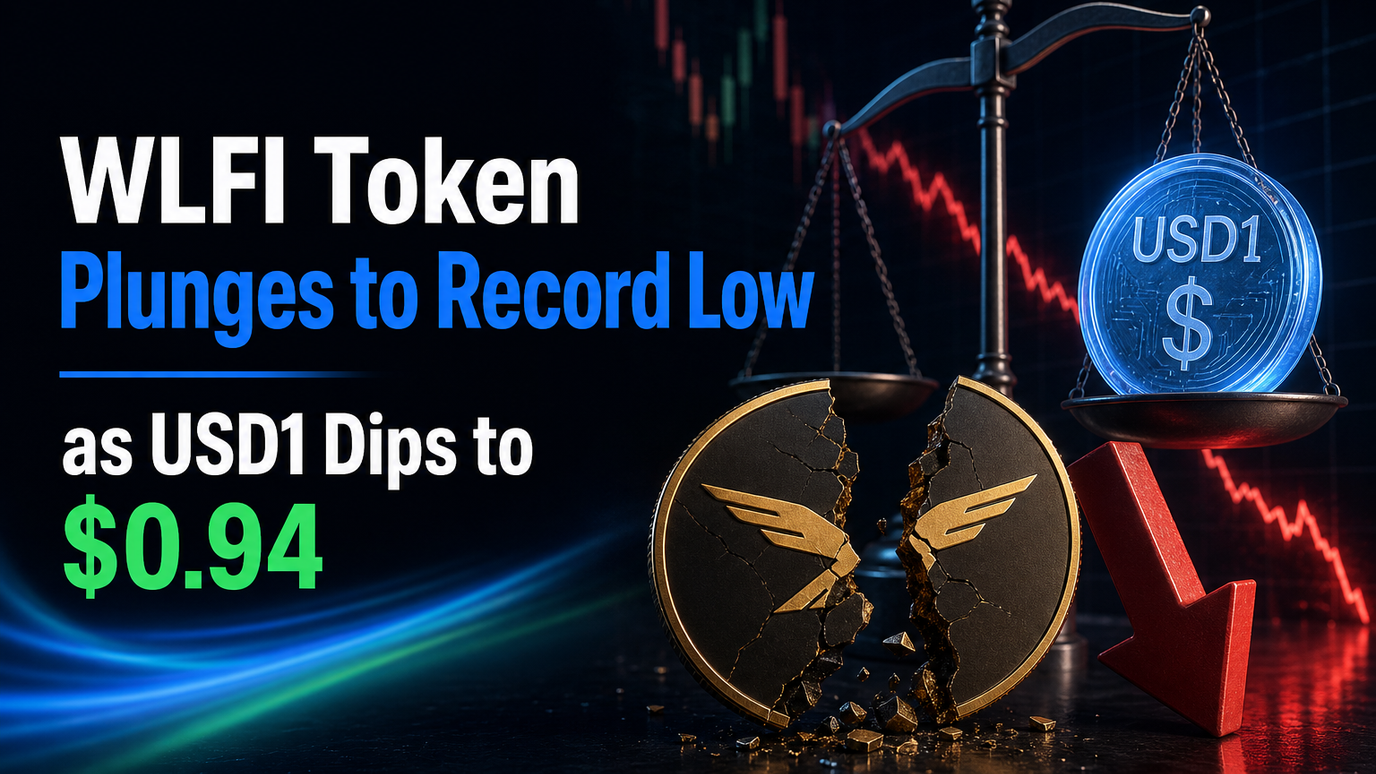
6 partsWorld Liberty Financial's governance token, WLFI, lost more than half its value in the 24 hours to Saturday morning, 28 November 2026, falling to an all-time low near $0.016 before recovering to about $0.020, according to CoinDesk. Over the same window USD1, the dollar stablecoin issued by the Trump-family-linked venture, briefly traded as low as about 94 cents on secondary markets before returning to just under $1. Tron founder Justin Sun, who is already suing World Liberty, used the sell-off to accuse insiders of misconduct and to call on exchanges to delist both tokens.
The episode matters for two different groups. WLFI holders have watched the token fall roughly 95% from its September 2025 peak of $0.33. USD1 holders face a separate question: whether a market price below $1 reflects a problem with the stablecoin reserves or a short-lived liquidity squeeze in a token that is supposed to be redeemable at par.
What happened
- WLFI: CoinGecko data cited by The Coin Republic put the token near $0.0198, down about 52% over 24 hours, with a CoinGlass intraday low of $0.01579 against a session high of $0.04130.
- USD1: CoinGecko recorded a low of $0.9394, about 6% below peg, followed by a recovery to roughly $0.998, according to the same report. CoinDesk, using TradingView data, described the low as about 94 cents early Saturday.
- Liquidations: CoinGlass counted $17.52 million of WLFI futures liquidations over 24 hours, about 88% of them long positions.
- Reserve-wallet sale: a wallet labelled World Liberty Financial: Strategic Reserve sold 12,121 ETH through CoW Swap for about $20.06 million, an average near $1,655 per ETH, according to on-chain trackers EmberCN and Arkham Intelligence as reported by CoinDesk.
The ETH sale is one of the few hard data points in the story, and it is a trade rather than a transfer: the coins were swapped for stablecoins on a decentralized exchange aggregator, not simply moved between wallets. CoinDesk puts the wallet's average acquisition price near $3,244, implying a realized loss of about $19.26 million on that ETH. That loss is on the venture's ETH holdings, not on WLFI. Lookonchain's breakdown, cited by The Coin Republic, splits the sale between ETH and liquid-staked mETH and arrives at the same total of about $20 million.
Lookonchain also reported that Jump Crypto withdrew 43.26 million USD1 from exchanges within about an hour, which it attributed to buying below $1 and redeeming through BitGo, USD1's reserve custodian. That pattern is how a redeemable stablecoin is supposed to recover from a dip: arbitrageurs buy below par and redeem at $1. It is reported from on-chain observation, and Jump has not publicly confirmed it.
What Justin Sun alleges
In a post on X, Sun called the day's move a rerun of what he described as insider circular lending to cash out, unauthorized insider selling, the illegal freezing of investor assets and investor fraud. He urged exchanges to delist WLFI and USD1, restrict deposits and require disclosure of where funds had gone, and claimed people linked to the team were mass-deleting posts. His post did not identify specific loans, wallets or transaction hashes, and none of these allegations has been independently established. Crypto Briefing reported that no exchange had been confirmed to act on the request.
The circular-lending accusation appears to connect to a loan CoinDesk reports World Liberty took earlier in 2026: about $75 million of stablecoins borrowed on the lending protocol Dolomite against roughly 5 billion of its own WLFI tokens. Commentary on X speculated that the ETH sale was meant to repay that debt or add collateral as WLFI fell. CoinDesk labels that link speculation, and World Liberty had not responded to its request for comment at the time of writing.
Background: a dispute already in court
Sun was one of WLFI's earliest large backers. His wallet was blacklisted in September 2025, freezing about 595 million unlocked tokens, according to CoinDesk; outlets disagree on how much he originally invested, with figures of $30 million and about $45 million both in circulation. He sued World Liberty in US federal court on 21 April 2026. In May World Liberty filed a defamation countersuit that, per CoinDesk, accuses Sun of shorting WLFI to drive its price down. World Liberty has previously said the restrictions on his tokens followed the disclosed token-sale terms. Both sides' claims are allegations in pending litigation, not findings.
Whether a token issuer can freeze holdings, and what that means for the holder, is covered in our explainer can a stablecoin issuer freeze your money; the same contract-level controls apply to governance tokens like WLFI.
Implications: observed versus conditional
Observed: WLFI repriced sharply, leveraged longs were forced out, a venture-labelled wallet sold ETH at a loss, and USD1 traded below par on secondary markets for a short period before recovering. Not observed: any confirmed shortfall in USD1's stablecoin reserves, any halt to redemptions, or any exchange delisting.
Correlation is not causation here. Crypto Briefing notes it is not established whether the ETH selling caused the WLFI drop, was triggered by Sun's accusations, or simply coincided with them. A brief market discount on USD1 is also not the same thing as a failed redemption; our guide to what actually happens when a stablecoin depegs explains the difference between a secondary-market dip and a reserve problem.
The conditional risk is about evidence. USD1 relies on BitGo custody and periodic stablecoin attestation reports. BitGo has published such reports, including one for May 2026, but the public record has had gaps, and we could not find one covering November 2026. If WLFI's slide continues to pull USD1 off peg, the speed and completeness of reserve disclosure will matter more than statements from either side. Readers comparing issuers on that basis can see how we weigh reserve transparency in which stablecoin is safest to hold.
What is still unconfirmed or next
- Why the Strategic Reserve wallet sold ETH, and whether it relates to the Dolomite loan. World Liberty has not explained the sale in the material we reviewed.
- Whether any exchange acts on Sun's delisting call.
- Whether Jump Crypto's reported USD1 redemptions settled at par through BitGo, and how much USD1 was redeemed in total over the weekend.
- A current reserve attestation for USD1 covering November 2026.
- Any new filings in the federal case between Sun and World Liberty.
Prices cited are as reported by the named data providers on 28 November 2026 and may have moved since. This report is for information only and is not investment advice.
Frequently asked questions
2 questionsDid USD1 lose its dollar peg?
Briefly, on secondary markets. CoinGecko recorded a low of about $0.9394 on 28 November 2026 before USD1 recovered to roughly $0.998. No halt to redemptions or reserve shortfall had been reported.
Are Justin Sun's fraud allegations against World Liberty proven?
No. Sun did not publish wallets, loans or transaction hashes with his claims, and the two sides are in pending litigation. His accusations remain allegations.
About the author
Ethan Brooks is a U.S.-based Senior Crypto Analyst at ChainWatch with nearly a decade of experience analyzing digital asset markets, blockchain data, and institutional trading activity.
How this was reported
ChainWatch Daily is independent and reader-funded. Stories are written by named journalists and checked against primary sources before publishing. We disclose holdings, correct errors in the open, and never accept payment for coverage. This article is information, not financial advice.
More like this

Bitcoin ETF Outflows Hit a Record as CFTC Opens the Door to Crypto Reserves
US spot Bitcoin ETFs lost $570 million on Monday, pushing November outflows to a record $4.71 billion. Meanwhile, CFTC staff said regulated derivatives venues may count Bitcoin, Ether and payment stablecoins toward operating reserves.
Priya Nair·5d ago·3 min
Bitcoin Slips Below $60,000 as Record ETF Outflow Meets a Stalled CLARITY Act
Bitcoin fell below $60,000 for the first time since July as BlackRock's IBIT posted its largest daily outflow, while U.S. lawmakers say the CLARITY Act will not pass this year.
 Ethan Brooks·Nov 21, 2026·3 min

Bitcoin Holds $62K Floor as ETF Outflows Persist and Anthropic's Record IPO Tests Crypto Demand
Bitcoin defended support near $62,000 on November 19 as U.S. spot ETFs bled another $306 million and the Fed sounded hawkish, while Anthropic's record Nasdaq debut put crypto risk appetite to the test.
Priya Nair·Nov 19, 2026·3 min