How a decentralised exchange works
There is no order book and no counterparty. There is a pool, a formula, and a price that moves as you trade against it.
- Published
- Nov 28, 2026
- Reading time
- 9 min
- Fact-checked by
 ✓ Theo Walsh
In this article
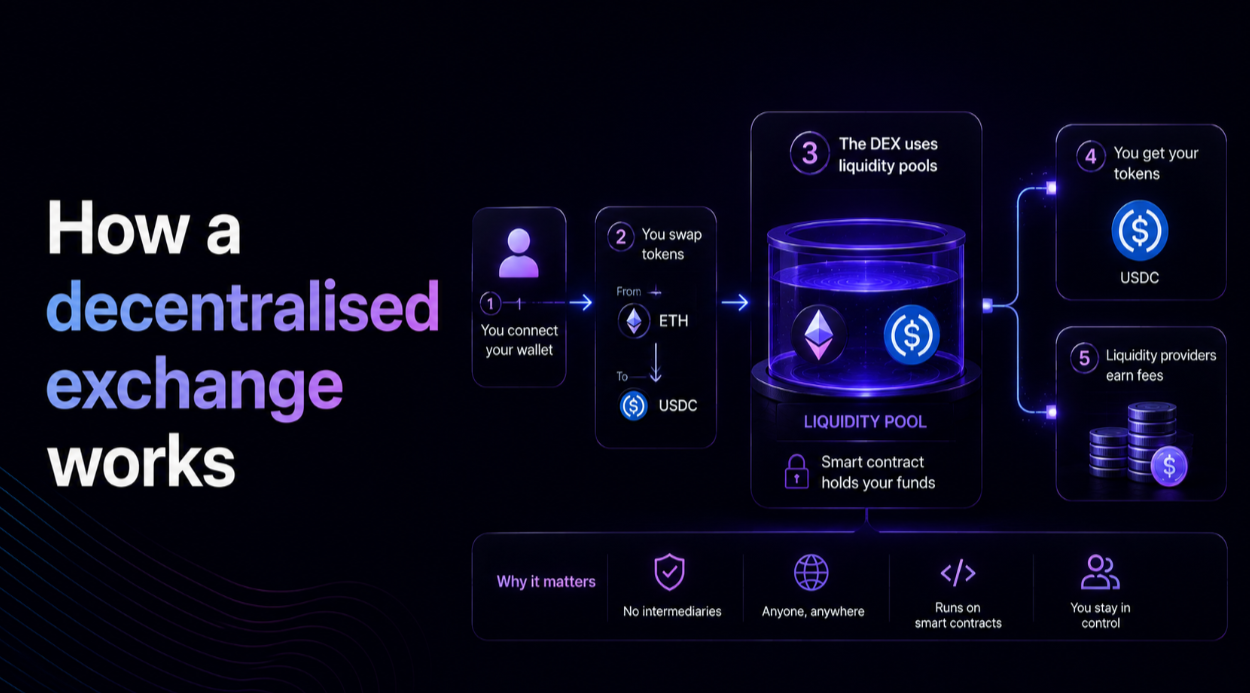
7 partsA centralised exchange matches your buy against somebody else's sell. A decentralised exchange has nobody to match you with. Instead there is a pool holding both assets, and a formula that decides the price from the ratio between them.
Understanding that one substitution explains almost everything else about how DEXs behave — including why a large trade gets a worse price than a small one, and why the advertised fee tier is not what you pay.
The pool
Liquidity providers deposit both assets of a pair. The pool holds them, and the ratio between the two balances sets the price. When you buy one asset, you add the other to the pool and remove the first — which changes the ratio, and therefore the price, in the direction of your trade.
Nobody quotes you a price. The formula does, from the current state of the pool, at the moment your transaction executes.
Price impact is not slippage
Two different things, routinely conflated.
Price impact is the price movement your own trade causes by changing the pool's ratio. It is deterministic: a bigger trade against the same pool moves the price further, every time, and it is knowable before you sign.
Slippage is the difference between the price you expected and the price you got because someone else's transaction landed before yours. Your slippage tolerance setting protects against that — set it too tight and the transaction fails, too loose and you accept a much worse fill. We go into both in slippage and price impact explained.
The fee tier is not the fee
Every comparison in this category quotes the tier a venue advertises — 0.30%, 0.05%, 0.01% — and every one of those numbers only applies to whichever pool you happen to land in.
So we did the division nobody does: thirty days of protocol fees over thirty days of volume, per venue, from public data. Aerodrome came out at 0.0506% realised; SushiSwap at 0.6639%. That is thirteen times the cost, at venues whose published tier sheets look broadly similar.
The realised rate is set by the mix of pools that actually trade, and that mix is not on anybody's fee page. The full comparison is in our DEX rating.
What you are trusting
- The contract. It holds the pool, and a bug in it is a total loss for that pool. Audits are not sufficient — Balancer V2 was among the most audited contract systems in DeFi and lost roughly $128m on 3 November 2025 to accumulated rounding error in its stable pools. About $27m came back; the rest did not.
- Yourself. You approve the transaction, and nobody will stop you sending funds to a malicious contract that looks like the real one.
- Your own approvals. Swapping requires granting a token allowance, which by default is unlimited and permanent — see token approvals.
- Not, notably, a company with your money. That is the actual advantage: there is no balance held on your behalf and no withdrawal to be frozen.
When a DEX is the right tool
For assets not listed on exchanges, for trading without an account, and for anything where you would rather not hand custody to a company. Costs are competitive at the better venues — 0.0506% realised is cheaper than every centralised exchange we measured — though network fees must be added on top, which changes the arithmetic for small trades.
For a first purchase with a bank transfer, a centralised exchange is still the practical route. The two are complements more than competitors.
The fee tier is what the venue advertises. The realised rate is what its traders actually paid, and the two differ by thirteen times across venues with similar tier sheets.
The short version
A DEX prices your trade from the ratio of assets in a pool rather than from an order book, so your own trade moves the price and larger trades cost more. Compare venues on realised fees rather than advertised tiers — the spread runs from 0.0506% to 0.6639% — add network costs, and remember the contract, not a company, is what you are trusting.
Frequently asked questions
4 questionsHow does a decentralised exchange work?
Instead of matching buyers with sellers, it holds both assets of a pair in a liquidity pool and prices trades from the ratio between them using a formula. Your trade changes that ratio, which is why it also moves the price — an effect called price impact.
What is the difference between price impact and slippage?
Price impact is the price movement your own trade causes by changing the pool's balances; it is deterministic and knowable before you sign. Slippage is the difference between the expected and actual price caused by someone else's transaction landing first, which your slippage tolerance setting bounds.
Which DEX has the lowest fees?
On realised cost — thirty days of protocol fees divided by thirty days of volume — Aerodrome came out at 0.0506% and SushiSwap at 0.6639%, thirteen times more, despite broadly similar published tier sheets. The advertised tier only describes the specific pool you land in.
Are decentralised exchanges safe?
There is no company holding your funds, which removes custodial risk entirely. What remains is contract risk, and audits do not eliminate it: Balancer V2 was among the most audited systems in DeFi and lost roughly $128m in November 2025 to accumulated rounding error.
About the author
Ethan Brooks is a U.S.-based Senior Crypto Analyst at ChainWatch with nearly a decade of experience analyzing digital asset markets, blockchain data, and institutional trading activity.
How this was reported
ChainWatch Daily is independent and reader-funded. Stories are written by named journalists and checked against primary sources before publishing. We disclose holdings, correct errors in the open, and never accept payment for coverage. This article is information, not financial advice.
More like this
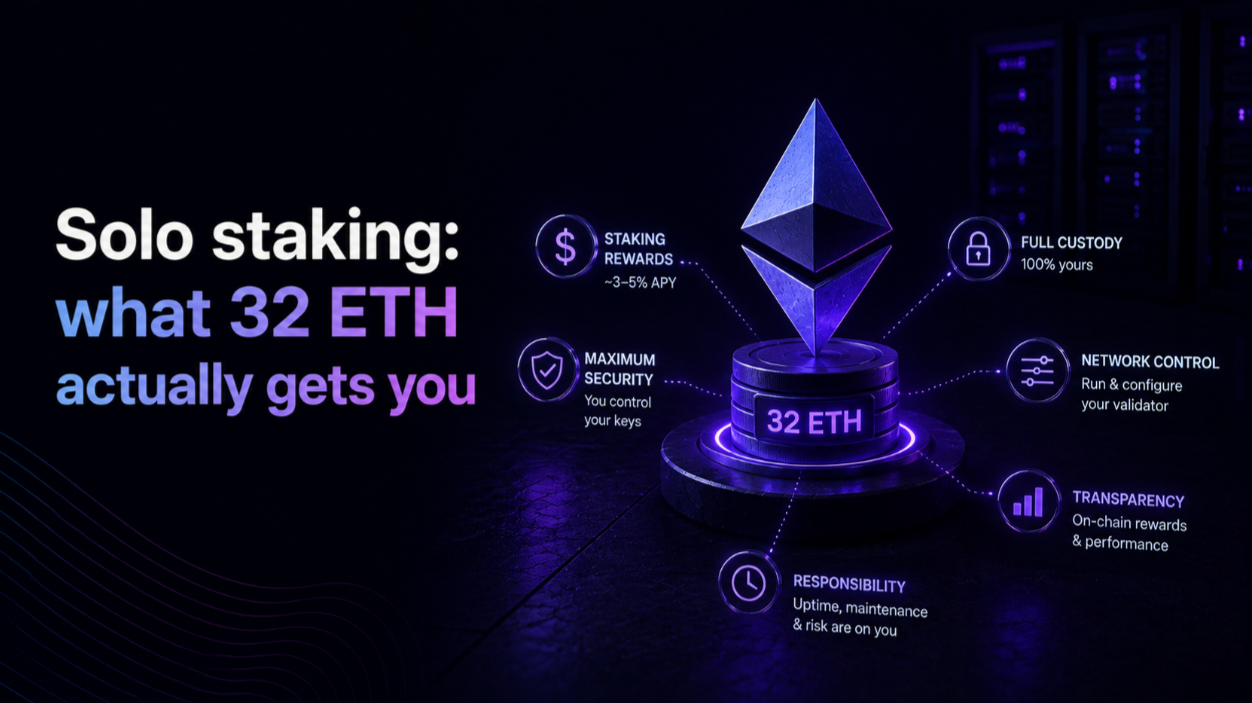
Solo staking: what 32 ETH actually gets you
The full rate, no counterparty, no token to sell — and every operational risk landing on you rather than on a company.
Theo Walsh·2d ago·8 min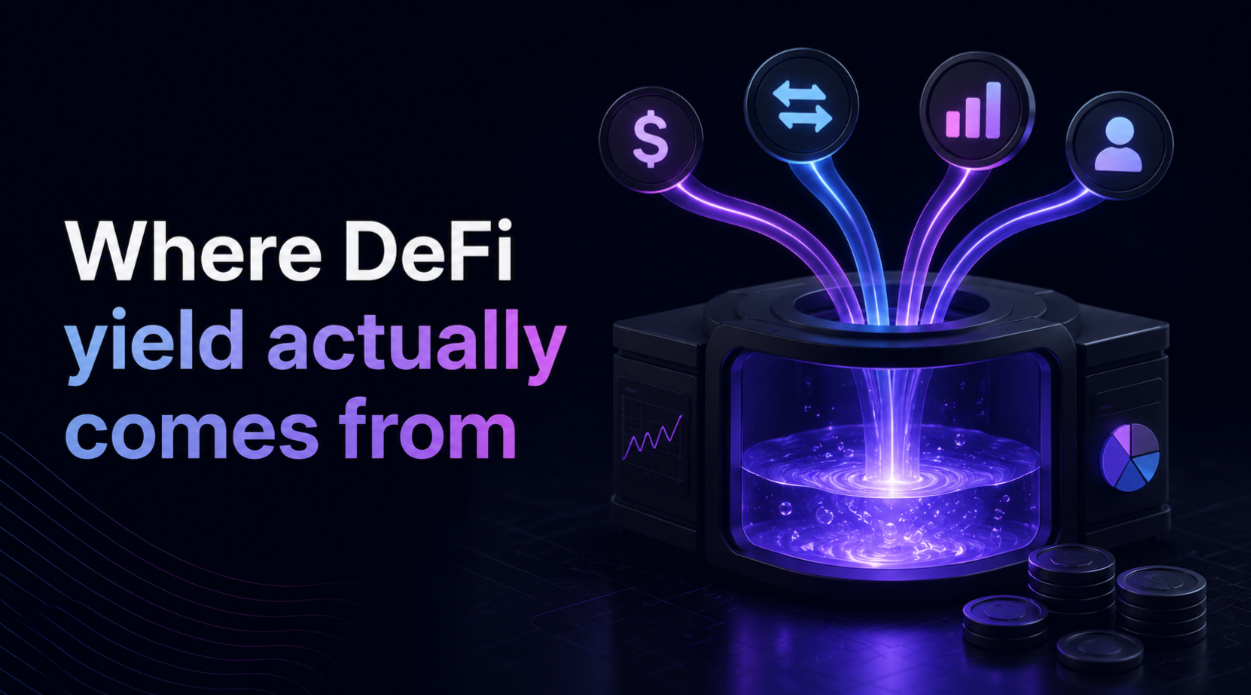
Where DeFi yield actually comes from
Four sources. Three of them are somebody else paying, and one is your own capital coming back to you dressed as a return.
 Ethan Brooks·Nov 20, 2026·9 min
How crypto staking actually works
The network pays one rate. Everything you can buy is that rate minus somebody's cut, and the cuts run from 8% to 29% — mostly undisclosed.
Ethan Brooks·Nov 8, 2026·9 min